Nick Leese ran the wonderful Heyday Mail Order service for many years, and he's been part of the music business for far longer than that.
In 'Recollection Box', Nick shares a few of his favourite stories, bands, albums and more with followers of Fruits de Mer....
A SAUCERFUL OF STARS
I've recently been revisiting the 'Grayfolded' 2CD issue from 1996, a Grateful Dead 'plunderphonics' experiment put together by John Oswald. From a hundred versions of 'Dark Star' recorded live between 1968 and 1993, Oswald 'created' two new variations titled 'Transitive Axis' (originally released 1994) and 'Mirror Ashes' (1995). It's a fascinating listen, one in which I hear something new every time. It's also an early example of 'mash ups' and unusual in that it also features every musician who was a member of the band.
I wouldn't consider myself to be a Deadhead, but I do occasionally wander through the band's labyrinthine world, being lucky enough to have had some guidance, whenever needed, from a friend and longtime Deadhead, but it hasn't always been that way! In late October 1990 I attended one of the band's Wembley Arena shows with another friend, who had a spare ticket. At that time The Grateful Dead were a band I'd heard of, but never really listened to, that's unless you count 1989's 'Dylan & The Dead' live album. The offer of a free ticket though, well...why not?
The communal atmosphere before the show immediately impressed me, I'd never experienced anything quite like it before. Lots of brotherly and sisterly love all around, inside and out of the arena. There was even a taper section being set up just below where I was sitting, which I was very surprised to see. In my experience, recording of performances would be done in a very 'cloak and dagger' manner, but here at a Dead show, it was allowed its own designated area - right there in the open! Some quite intricate equipment was on display too, in order to capture the proceedings in nothing less than 'living stereo'! Perhaps there was a little too much in the way of tie-dye though, sporting an array of images, well, skulls and roses mainly, which I did find rather creepy, being nestled among all those generally good vibes.
Once the show began, I couldn't believe how TAME the music sounded. I was expecting to hear something wild and psychedelic, this WAS 'The Grateful Dead', right? It seemed the image was by far outweighing the music. I just didn't get it. I began slumping further and further back into my seat as I waited patiently just for something to happen and when it finally did, I was still taken by surprise! That 'something' was 'Drums/Space'. How did I know this? Well, all around me there was a lot of scribbling happening on bits of paper. It seemed that everyone (except me) was compiling a set list for the show as it went on. Going on and ON also, was 'Drums/Space' and seemingly nowhere, in my opinion. It was making me feel very uncomfortable! Eventually, I decided I couldn't take it anymore. I was out of there. The only show I've ever left before the end. I just couldn't appreciate the music of The Grateful Dead, but now, with hindsight, I realise I wasn't quite ready yet. They just left me a headache!
Relations between The Dead and myself improved a short time after that Wembley debacle, thanks to meeting my 'Deadhead' friend. I discovered that there were things about the band's music that did interest me. 'The Grateful Dead Ethic' was certainly worthy of respect. In particular, I became most interested in the phenomenon that is 'Dark Star'. I was intrigued by how a song that clocked in at under three minutes as a studio recording could be expanded to anything up to 48 minutes in performance. At this point in my listening, I'd only encountered The Church's live explorations during 'You Took', but these weren't anywhere near where The Dead had taken 'Dark Star' over the years. By 1996, with a few choice tapes, I had for myself a modest selection of 'Dark Star' performances to hear/compare/enjoy. This was also when along came the double 'Grayfolded' CD issue on import. I wasn't even aware of the project until then, so it was a pleasant surprise for me to have two 'new' versions of 'Dark Star', each made by the 'folding' of previous performances 'one above another' or 'overlapping' them. Both these versions go beyond 48 minutes as well!
'Transitive Axis', the first experiment, runs at just short of an hour and sounds more like the 'general' live version performance of 'Dark Star', if there is one! It's made up of nine parts. Jerry Garcia's distinctive 'cascading' guitar picking dominates throughout and the folding technique often gives this an 'orchestral' effect. It's all quite trance inducing to listen to. Phil Lesh, who originally proposed the idea of 'Grayfolded' to Oswald, also has the chance to shine with his own free-form interlude, appropriately titled 'The Phil Zone', from which emerges a glorious 'Spanish Jam' section, 'La Estrella Oscura' ('The Dark Star' in Spanish). The 'Spanish Jam' was a favourite inclusion at a Dead show and inspired by 'Solea', a piece in the Miles Davis and Gil Evans collaboration 'Sketches Of Spain'. 'The Phil Zone' > 'La Estrella Oscura' is my favourite section of 'Transitive Axis', where the improvising feels at its most intuitive, but having said this, I'm also quite taken by the earlier 'Clouds Cast' as well. During 'Clouds Cast', layered voices eerily appear, the word 'dark' being sustained over a few minutes as it weaves gently in, out and all around the music. 'Clouds Cast' is 'Dark Star' sounding its most 'celestial'! Eventually 'dark' is followed by '...star crashes' and the voices appear to 'tumble' back into the music before finally disappearing. The production of 'Transitive Axis' is a work of art, even though its ending is quite abrupt! The reason for this, I later discovered, was to leave the listener in expectation of 'Mirror Ashes', which was to follow 'Transitive Axis' a year later.
'Mirror Ashes' is the more experimental side of 'Dark Star' improvisations. Initially I didn't enjoy it as much as 'Transitive Axis', it felt disjointed, but over the years it's become something I can now actually relax to, even during something like the 'Cease Tone Beam' > 'The Speed Of Space' section, where the general ambience of 'Mirror Ashes' gives way to a bit of a free jazz wigout! I can now ride through such things effortlessly. There have been no more 'Drums/Space' 'incidents' to report here since 1990! 'Mirror Ashes' also features vocals, and those found among 'Dark Matter Problem' / Every Leaf Is Turning' sound as if they're coming from the far reaches of space!
One surprise for me with 'Mirror Ashes' was the (eventual) discovery of a hidden track, 'Fold', placed right at the beginning of the disc, before the first track even. This two minute multi-layered dose of feedback sets the tone quite nicely for the rest of 'Mirror Ashes' and makes me wonder why it was chosen to be hidden? It took some skill to finally get to even hear 'Fold', having to 'rewind' the CD after the start of the first track and release the reverse or '<<' button at just the right moment to catch where the track started. Miss this moment and you have to begin again. It took quite a few attempts to master this trick. As if the inclusion of pesky hidden tracks, found scattered at the end of some CDs weren't bad enough to navigate sometimes! Oh, I don't know...
'Grayfolded', yes, a very interesting release, as vast as it is complex, just like the world of The Grateful Dead. FdM too, come to think about it!! Good to hear once more, so, while still in the mood for spaced out sounds, how about pulling All India Radio's 'On Pink Floyd' from the shelves?
Since the late 90s, All India Radio has had a fair number of ambient/electronic releases. 2022's 'On Pink Floyd' EP, despite adding three(!) more versions of 'Set The Controls...' to a long enough list already, does contain some other, more inspiring choices - 'Obscured By The Clouds', in all its rumbling glory, plus two standout versions each (one with vocals, the other instrumental) of 'Julia Dream' and 'Cirrus Minor'. I thought I'd already heard my favourite versions of these latter two tracks. I remember being most smitten by Us & Them's beautiful 'Julia Dream' (given further context as a medley with the African-American folk lullaby 'All The Pretty Little Horses') and Cary Grace's ethereal take on 'Cirrus Minor'. Wonderful music, but All India Radio's versions are equally as impressive, capturing the haunting and desolate quality that I hear in much of the music of Pink Floyd just after Syd left the band.
The vocals for 'Julia' and 'Cirrus' here are 'ghostly', hardly there at all really. Swirling around my head as I listen, are all of those childhood fears and remote feelings found in the lyrics, ('...will the following footsteps catch me...', '...a thousand miles of moonlight later...'), but as instrumentals, wow, these emotions feel much more intense. I'm taken right back to a weekend, when at around fifteen years old, I watched 'The Wicker Man' on TV and heard 'Relics' for the first time. The merging of the images from the film with the music of Floyd left me spooked somewhat. Afterwards, things looked a little different to me with the world and I had no need for the Top 40! I was on another path from then on. These versions serve as both a tribute to Roger Waters as writer and All India Radio as interpreters. 'Julia' sounds even more haunting, while 'Cirrus' seems to hang suspended in time.
Hear for yourself on Bandcamp and swoon! (CLICK HERE)



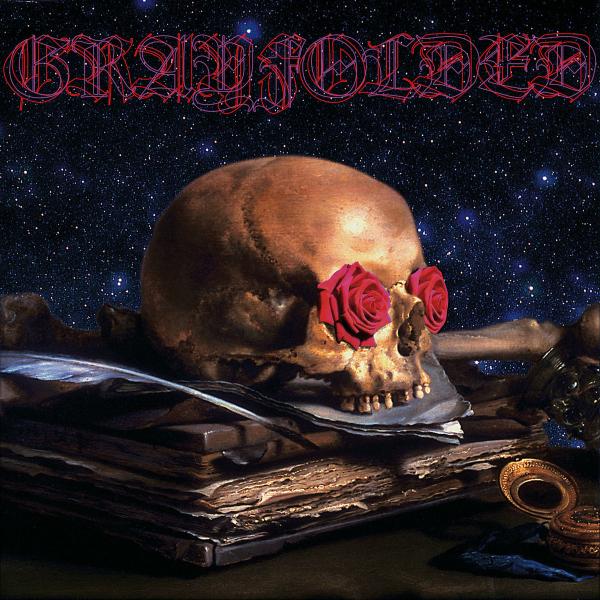 I've recently been revisiting the 'Grayfolded' 2CD issue from 1996, a Grateful Dead 'plunderphonics' experiment put together by John Oswald. From a hundred versions of 'Dark Star' recorded live between 1968 and 1993, Oswald 'created' two new variations titled 'Transitive Axis' (originally released 1994) and 'Mirror Ashes' (1995). It's a fascinating listen, one in which I hear something new every time. It's also an early example of 'mash ups' and unusual in that it also features every musician who was a member of the band.
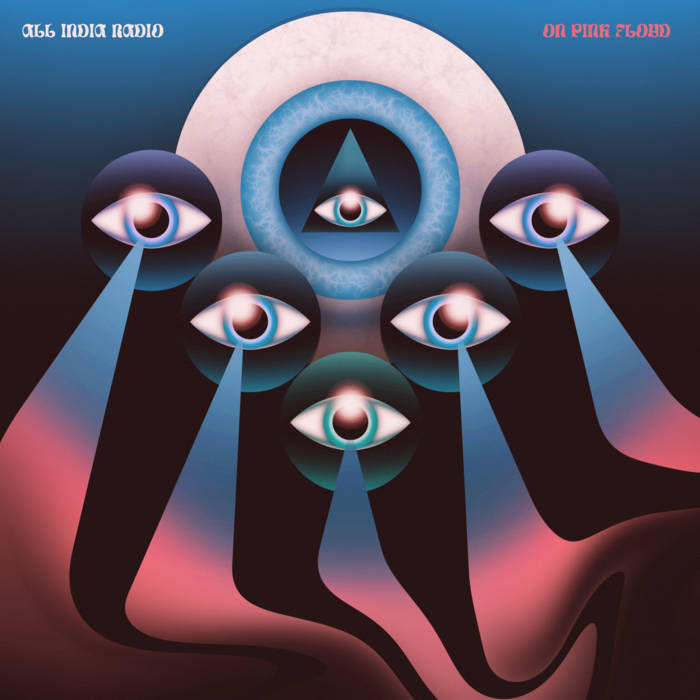 Since the late 90s, All India Radio has had a fair number of ambient/electronic releases. 2022's 'On Pink Floyd' EP, despite adding three(!) more versions of 'Set The Controls...' to a long enough list already, does contain some other, more inspiring choices - 'Obscured By The Clouds', in all its rumbling glory, plus two standout versions each (one with vocals, the other instrumental) of 'Julia Dream' and 'Cirrus Minor'. I thought I'd already heard my favourite versions of these latter two tracks. I remember being most smitten by Us & Them's beautiful 'Julia Dream' (given further context as a medley with the African-American folk lullaby 'All The Pretty Little Horses') and Cary Grace's ethereal take on 'Cirrus Minor'. Wonderful music, but All India Radio's versions are equally as impressive, capturing the haunting and desolate quality that I hear in much of the music of Pink Floyd just after Syd left the band.