


CATCHING UP WITH...
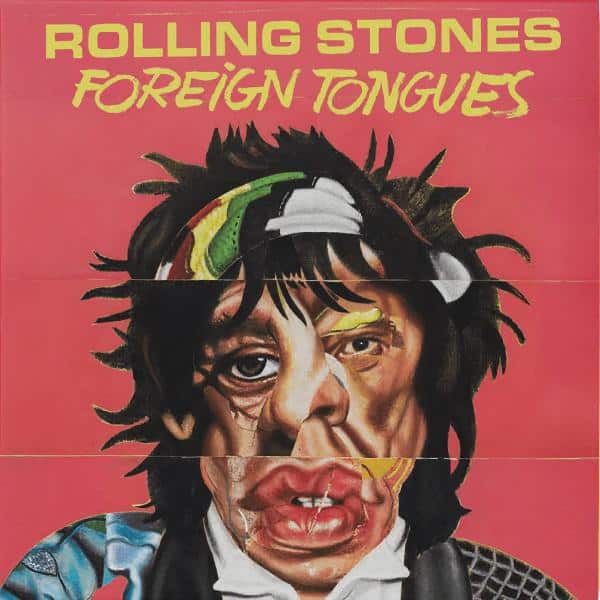 As the year draws to a close—and not slowly either; it’s frightening how quickly time passes these days — I’ve been taking stock. There's always some music I haven't heard for a while that I want to reacquaint myself with, and perhaps even discover something new in it. It happens! Then there's some I've recently acquired that I should get around to hearing before passing final judgment—stay or go! In this respect, I've been rather ruthless over recent years. There have been some regrets, but I only have so much space and time. I still have more than enough music here to listen to, so I feel I need to justify keeping anything these days—especially since my hunger to hear new things shows no sign of abating! Right, let's begin with 'Foreign Tongues' by The Rolling Stones...
I never thought I'd say this, but I really wanted to dislike this album. I thought the seemingly endless promotion in the run-up to the release, the number of formats available, the brands it became aligned with, and, well, everything else seemingly irrelevant to the band and their music that a 'tongue and lips' logo could be stuck on—it was all rather shameful really. Do The Rolling Stones really have to do all this just to put out a new album? I dunno, maybe it's me that's getting old?
Then I heard the single "In The Stars"—the best entry point to a new Stones album for goodness knows how long! I just love the hook—a dash of "Gimme Shelter"—it gave me the shivers again, and so, as I've done since 1978 with Some Girls, I picked up a copy of the album—only one copy mind—on the day of its release. It's a habit, I'll admit it, but the truth is I remain a fan, perhaps not of everything they've released since probably 1989, but a fan, all the same. I can't help myself—it's only rock 'n' roll but...well, you know how the song goes...
I prefer "Foreign Tongues" over "Hackney Diamonds", yet something still niggles me about both albums. Keith continues to step back, leaving Mick pretty much in control and altering the band's original balance. Gone is the swagger, the looseness, and the raw music I loved when Keith was more involved. Instead, modern overproduction tightens the songs to the point of snapping, with Mick at the helm (assisted by producer Andrew Watt). I suppose I'm missing that 'groove' of old. I'm missing Charlie too.
It's been a struggle for me to even hear Keith's contributions on these last two albums, aside from his now trademark ballads. Those are a most welcome relief to the excessively hasty songs from Mick, where his non-stop howling won't let some of the songs even breathe at times. They're quite exhausting to listen to. As I said before, maybe it's me that's getting old—yet there still remains something about The Rolling Stones, and any new music from the band, that I just can't turn away from! So, less of my gripes and more about what it is I do like about Foreign Tongues. Keith has given more than enough over the years to take things easier now. I guess as long as he's still around, and I can still (just about) hear him, I'll be sticking around too.
First, "Foreign Tongues" has some of Mick's best lyrics in many years. They are more pointed, less filled with bravado, and at times, even quite poetical—take "Ringing Hollow" for example. On this track the Stones also get back to country music, which is always something they've done well, usually when Mick decides to take it seriously. The lyrics recount his love affair with the States, from teenage infatuation right up to his current feelings. Hey, and who does that voice belong to—the one back there in the choruses lagging ever so slightly behind Mick's? Why, if it ain't Keef! It sounds just like the good old days, too! I don't have to tell you how good that was to hear; it's been a while!
Keith's ballad contribution this time around is "Some Of Us", an unused mid-80s track. I wasn't so sure about this one at first—as is the case for me with many of Keith's ballads, and that even includes "You Got The Silver", "Coming Down Again", and "All About You". But like those, it has gently eased its way in, the more I listen, as they are always slow burners. I don't mind if he no longer wishes to write uptempo songs; these slower tunes are more befitting his age. Let's now leave the rocking to Mick, eh!
"Mr. Charm" finds Mick chiding the wealthy, even naming one person in particular. I can't help but think of a line from "Ringing Hollow" here: "What do you think about that?" It's an oddity of a song for the Stones, but, man, it's catchy! Mick's words haven't been this playful since Between the Buttons: "...do anagrams, spew epigrams, I don't give a damn, madame..."
"Rough & Twisted" is a rootsy, Chicago electric blues that I fell for immediately; it reminded me of their arrangement of "Stop Breaking Down", from way back. The lyrics are strong, but my only reservation is that Mick's delivery feels a little overworked; he could have given the music more space. Better, is "Beautiful Delilah", where The Stones go even further downhome—and what a good idea to arrange this Chuck Berry song in the style of its inspiration, Fred McDowell's "Drop Down Mama". If Foreign Tongues is to be the second in a trilogy of albums, then I wonder what the band will choose to close out their next album with? Muddy's "Rolling Stone" graced Hackney Diamonds, so my money's on an acoustic Bo Diddley number, especially since the band 'recently' covered both Howlin' Wolf and Jimmy Reed (other key Stones influences) on Blue & Lonesome. We'll see...
It'll also be interesting to see how the 'push and pull' between Mick and Keith plays out next time. The Stones are showing no signs of stalling—at least not in the studio—and for now, since the release of Foreign Tongues, they and I have reached a kind of 'understanding', too...
Listening to Terry Callier recently — and then finding a cheap, used copy of Tim Buckley’s Live at the Troubadour 1969 hard to resist—prompted me to return to Tim's early albums for the first time in quite a while. I’ve previously found much of his music a challenge, but I’ve also remained intrigued by it, so I've kept hold of it. I've always got along okay with his debut and Goodbye And Hello, but I never quite found a way into Happy Sad, Blue Afternoon and Lorca. Perhaps now the time is right to listen again?
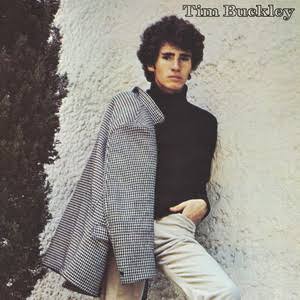
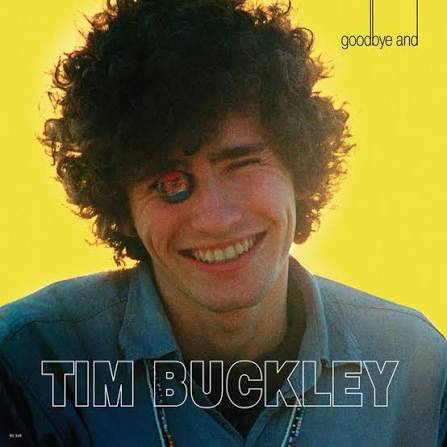 I began by spending time listening to the first two albums again, just to start gradually. They're still keepers, even though Buckley's voice can sometimes take some getting used to. I see now that he was searching for the best ways to use it effectively, but those songs hadn't been written yet. While there's a certain majesty to tracks like "Wings," "Song Of The Magician," and "It Happens Every Time" on the first album, along with its predominantly folk-rock influences, I'm still drawn more to Goodbye and Hello. The sequence of "Pleasant Street", "Hallucinations," and "I Never Asked To Be Your Mountain" still packs one hell of a punch! The mix of West Coast and Eastern vibes on this album is intoxicating, too. So far, so good then, so now let's reconsider Happy Sad through to Lorca...
My listening habits have also changed since I last played Tim's albums. I've become more interested in improvised music, jazz in particular—something I previously never thought possible—though it now feels like a natural progression for me. I've come to realise that there is only so much 'three chords and a cloud of dust' can offer me now, so I've tried to expand my horizons. Perhaps this was all I needed to finally 'get' the music of Tim Buckley.
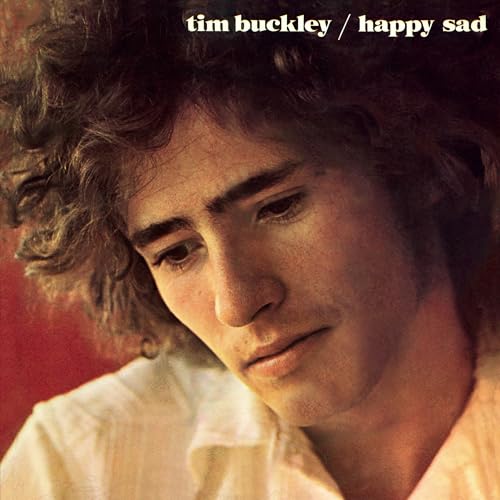 Hearing just the introduction to "Strange Feelin'" on Happy Sad, with its similarity to "All Blues" from Kind of Blue, made the rest of Happy Sad feel familiar too. It seems Buckley's move from folk-rock to a more jazzy style had initially caught me out! Now I'm ready—he was just moving a little too fast for me! The addition of the vibraphone on much of Happy Sad (and Blue Afternoon), together with his voice now being less 'above' the music and more 'within' it, creates a wonderful ebb and flow. It's quite magical music! I have to admit to still not really understanding many of the lyrics to the songs, but the 'sound' of the words, drifting along with the music, can be quite evocative—I can, at least, 'feel' them.
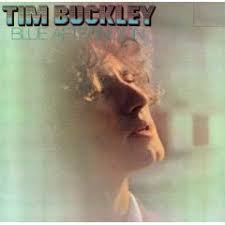 "Blue Afternoon" feels like a turning point for me in listening to Tim Buckley. This album demands the listener's attention, even more so than Happy Sad; it's not background music. Nick Drake's work shares the same quality which is likely why, quite often, the two artists are mentioned together. In fact, it's no secret that Nick was also a fan of Buckley's music.
There's a definite 'wholeness' to the music of "Blue Afternoon" — I find it quite spellbinding. Yet, whenever I listen, Lee Underwood's guitar leads, John Miller's upright bass, and David Friedman's vibraphone all seem to move in tangents to each other. This makes it enjoyable to follow each individual line throughout a song. Then there's Tim Buckley's voice, weaving among all of this—the finishing touch!
Previously, I've always preferred 'character' voices in music more so than a 'pure' voice, but it's on this album that I finally came around to Buckley's clear enunciation. I just love hearing him sing the word 'blues' the first time around on the hook of "Chase The Blues Away". It hangs endlessly, and I'm even further impressed by how he then sings the same line differently later in the song. Masterful singing!
I'm now all set to hear "Lorca" once more, but first I have to mention the closing track on "Blue Afternoon" — "The Train" — where a couple of minutes into the song, Underwood's playing really takes off, Miller adopts the rhythm of a train (a runaway one at that!), while Tim scat sings with both! It has to be a first take, and I wonder if it was inspired by John Coltrane's (Trane/train) improvisations?
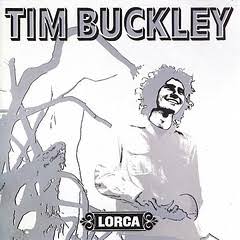 "Lorca" takes everything on "Blue Afternoon" even further—yet the music appears sparser, almost ghostly. The focus now is firmly on Tim's voice. Certainly, "Lorca" and "Anonymous Proposition", which make up the entire first side of the album, are indicative of this and have a haunting quality. They left me feeling a little disturbed afterwards. They're the most challenging listen I've had so far on this journey, but again, I'm sure that concentration and further plays will be worthwhile. I won't give up now.
So, Buckley's moving forward yet again on "Lorca"? Not quite. The rest of the album—three songs taken from a live performance at The Troubadour in 1969—has a 'warmer' feel that aligns more with the previous two records. Once again, Tim's voice is the main instrument and it's amazing how far he can stretch it here, too! Years ago, I might have struggled with this, but now it's much easier to appreciate it as the heart of his music.
I'm looking forward to hearing "Live At The Troubadour 1969" now, especially after getting a taste of what's in store by listening to the live songs on Lorca. That should keep me occupied while I hunt for a copy of "Starsailor" — I've read it's where those jazzier improvisations peak! Dare I then also try those often-derided final three 'soul-funk' albums? Maybe...
In the meantime, I've got more catching up to do, now that Mike Scott has found even more tracks from The Waterboys' "Fisherman's Blues" era, and released them as a triple set, entitled "Atlantic Rain"...
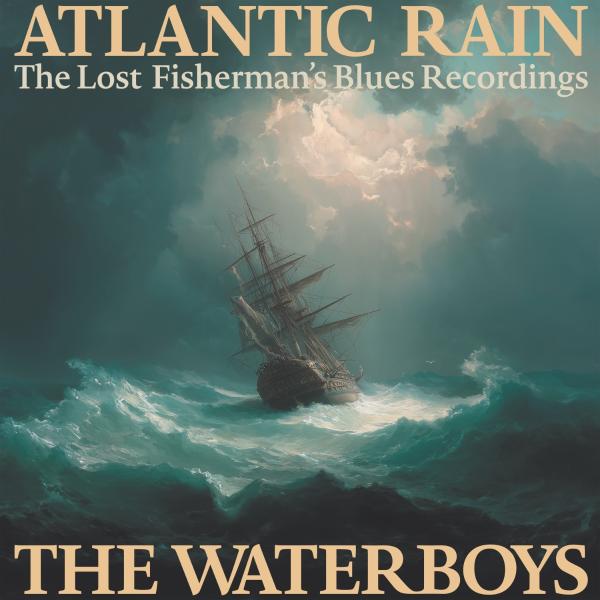 The number of released recordings made by The Waterboys between "Fisherman's Blues" and "Room to Roam (1986–1990)" — a period where the band delved deeply into folk, blues, country, and gospel—already fills two sizable boxed sets: the six-disc Fisherman's Box and the five-CD, one-DVD "The Magnificent Seven". And yet, it seems there is still more to be heard!
I've spent hours listening to all this music too, poring over the liner notes, and cramming in as much information as possible about the recordings and this era in the band's history. Perhaps my time management is questionable here, but I remain utterly fascinated by this period of their career. It also helps being a fan of 'roots' music—which, for me, is the music of the soul. The Waterboys are one of the few modern bands to truly explore this genre, and in the process, they have opened my ears to so much more.
With Atlantic Rain, there are even more unheard tracks to savour, extended versions of old favourites to satisfy your hunger, and surprise cover versions to enrich the canon. From the first listen, two of my personal favourites moved up a notch: "Killing My Heart" and "We Will Not Be Lovers".
The alternate version of "Killing My Heart" reaches its full length at last! I've always preferred this arrangement over its companion piece, "When Ye Go Away" (same lyrics, different music). Here, with a little remixing along the way, the feeling of the song is fully realised.
In his liner notes, Scott remarks on the 'orchestra' created by Steve Wickham's fiddle and Anthony Thistlethwaite's primitive Hammond organ technique. It is indeed almost psychedelic—or, to be more precise, psychedelic folk. Cool Dylanesque lyrics too - "...you ain't calling me to join you and I'm spoken for anyway..." Come to think of it, this song would have fit on "Bringing It All Back Home" quite nicely!
The real jewel on Atlantic Rain is the longer, live take of "We Will Not Be Lovers", put down on tape during a tense and fraught session in the studio—particularly within the control room. Scott decides the only way to clear the atmosphere is to rally the band and launch into this song. I love to hear moments like these, where the music is loaded and it's exactly the right time and place. Wow, to think this version was left in the vaults! Thistlethwaite duels further with Wickham, this time on electric mandolin, and the rise in intensity between them as the song unfolds is matched equally by Scott's vocals and angry lyrics...
"...the touch of your skin is tough to resist, planets...
collide,
collide,
collide,
at the smack of your kiss, but you can kiss your brother, because we will not be lovers..." Poetry!There are a few seconds of eerie silence following the end of the song, as the band awaits a response from the control room. "...good one, that was great!" comes first, probably from engineer Pearse Dunne, followed by producer Bob Johnston's even more enthusiastic whooping and "God almighty!" It certainly is a special, dynamic performance, and as Scott affirms in his notes, "Let this version stand as the true record of the moment". With some inspired sequencing, "We Will Not Be Lovers" is then followed on the set by the extended take of "Lost Highway", just to settle things down a little, and it's good to finally hear what happened after the fade on the previously released version!
Other cover versions of note on Atlantic Rain are "No Expectations" (no slide guitar on this, but a cool sax solo instead), "When Doves Cry", and a respectful rendition of Willie Nelson's "Angel Flying Too Close To The Ground". I haven't heard Nelson's original version, nor Dylan's recording of the song, but I was deeply touched by The Waterboys' version. Scott finally got around to recording the complete vocals in 2025, when he was compiling the set, and there's a real feeling in his voice which could only come from maturity.
There are further songs of reflection to be found throughout Atlantic Rain—"The Man With The Wind At His Heels", "Saints And Angels (1988 version)" and "Come Back To Galway" in particular. The latter features another 2025 vocal to complete the song and again feels all the more heartfelt with the passing of the years.
Finally, I was pleased to discover that during this period the band also returned to a This Is The Sea experiment, "The Waves". This time they employ an acoustic guitar, alongside the resumed duel between the fiddle and electric mandolin. It's not the complete version of this particular recording either—just the last six or seven minutes—which, according to Scott, was "...when everything special happened...". "The Waves", no matter the musical setting, remains spirit-lifting!
Will Atlantic Rain ultimately be the last word we hear from this productive era for The Waterboys? Tantalizingly, towards the end of his liner notes, Scott provides a two-page list of other recorded songs from that time—both originals and covers, in various states of completion. I can think of no other reason for including this than to tempt a response from his listeners! Well, Mike, I'm all ears! To my mind, this music is as wide a world as the one Dylan and The Band were exploring at Big Pink all those years ago—and just as enriching. After all, "big music" isn't just about being loud...