
CLICK TO VISIT OUR SHOP LATEST NEWS DISCOGRAPHY MEMBERS CLUB BLOG CONTACT US HOME


Chris McGranaghan owned a record shop and label for many years (Those Old Records in Lichfield).Today, he's semi-retired and living near the sea in Northumberland, where he now hosts a radio show for Lionheart Radio.
In 'The Outer Limits', Chris shares a few stories from his 'back-catalogue', and looks at some artists who are on or beyond the fringes of FdM's coverage...
Poor Old Johnny Ray
“Poor old Johnnie Ray
Sounded sad upon the radio
Moved a million hearts in mono
Our mothers cried Sang along,
who'd blame them?”
Dexy’s Midnight Runners – Come on Eileen
You may wonder why I have included Johnnie Ray in the lexicon that is the Fruits De Mer “Other Voices”. I wondered too and indeed held back on this for a while thinking that it was a little too odd for these pages but here it is. Johnny Ray was American crooner from the early 1950’s, Hank had died in 1953, Johnnie was pre-Elvis, pre–Rock N Roll and all that followed. In many way he was the link from Frank Sinatra to Elvis Presley. My take on Johnny is that he paved the way for the Rock n Roll that followed him, he was the real deal.
Johnnie was born John Alvin Ray in Dallas, Oregon in 1927. He suffered a blow to the head at the age of nine which seriously impacted his hearing and by the age of 14 he was diagnosed as mentally retarded. He was soon totally deaf and depended on a series of hearing aids that allowed him to speak and eventually sing in his own unique style. His “crying” style became a trademark and some of his records sound like he is on the edge. Medical science has advanced enormously in the past 70 years, and he was dealing with very basic hearing aids so achieving what he did was quite something.
He was 24 when he hit the big time having previously released a few sides on the little-known Okeh label. Because little was known about him at the time, his records were picked up by the black R&B radio stations and in a club called “The Flame” in Detroit. Initially those in the music business thought that he was a woman and black, so it came as some surprise when he turned out to be male, white and gay. He was head hunted by Maurice King (who later went on to be a musical director at Motown) and recorded more tracks a few days later. His first release was finally banned from some radio stations due the suggestive nature of some of the lyrics, tame by today’s standards but ruffled a few feathers at the time.
Johnny Ray - Whiskey and Gin
So, what’s the attraction? Well, the way I see it is that Johnnie led the way Elvis and many others. He had a commanding stage presence, was prone to smashing piano lids, throwing mic stands around and moving around the stage and audience. Sound familiar? This guy was Rock n Roll before Jerry Lee, Little Richard and the rest of them. His next hit was “Cry/The Little White Cloud that Cried” was to be one of his biggest songs and one that Bob Dylan writes about in “The Philosophy of Modern Song” Bob was a big fan and Johnnie was one of the first singers that really moved him emotionally. Bob said - “It is the voice of a damaged angel cast out walk the streets of dirty cities, singing and squealing, crying and cajoling, banging mic stands and piano stools”
Cry is about as emotional as a song can be encouraging the listener to “hang your head down and cry”. This is real, blood, guts and thunder stuff, there’s no way out, you’re never the same again and a spell has been cast. Johnnie got you and it’s ok to cry. It sold 2 million copies in the US and then the B side has another smash hit, nice trick if you can pull it off.
Johnny Ray – Cry
Hit followed hit and Johnnie was big-time selling shows all over the country. He appeared on many television shows as a guest, and it is from these films that you get a sense of the stage presence mentioned earlier in this piece. He left Okeh Records and signed to Columbia, and which saw the end of R&B hits but took him to another level in terms of national popularity. The Columbia material made him a bigger name, but he never had another R&B hit but continued to be very popular with the black community for his live shows.
Then came the “revelations” saying that his hearing aid was a gimmick and salacious stories about his homosexuality. It didn’t seem to bother him, but times were changing too. He continued to record and picked the best session musicians that were around at that time. It’s true to say that it wasn’t all great music and there is the usual mixture of crud with the diamonds, but those diamonds still shine and move me.
By 1955 his star was on the wane and returning to the US from a UK tour he was asked how he felt about Elvis Presley. His reply was that he didn’t know what an Elvis Presley was. The media jumped on that and accused him of sour grapes and Rock N Roll started in inexorable climb up the charts and the teenage psyche.
Johnnie continued to have chart hits, more memorably “Just Walkin’ In the Rain” in 1956 which is an outstanding cut and still sounds fresh today. Like a lot of his material there are several layers, what is a pop hit on one level is another level of pain and despair. This shit is deep – Richard Thompson should cover it.
Johnny Ray - Just Walkin’ In the Rain
As was usual in those he had inevitable duets, the best being with Doris Day who was everything that Johnnie wasn’t. Best avoided and not his best material. He recorded some of his best material in May 1957 with the Ray Conniff Orchestra when he cut Soliloquy of a Fool, surely his finest tune and extremely odd too. Just check it out – I can hear Suicide, Soft Cell and even Philip Glass. Heart on the sleeve isn’t in – this track is astonishing.
Johnny Ray - Soliloquy of a Fool.
Johnny died in 1990 aged 63 from liver failure. A lifetime of booze and other medications finally caught up with him. He is buried in Hopewell, Oregon.
Recommended Listening
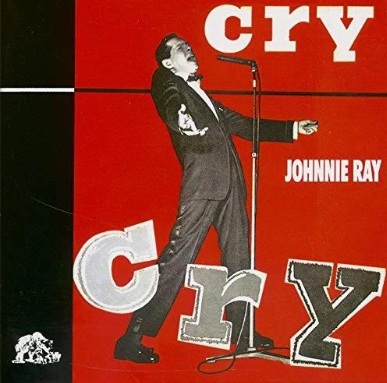
Bear Family Records in Germany have released a 5CD box set with an extensive booklet which is well worth the purchase if you are a completist (which I’m not) They also released a single CD set with a large booklet which again is a great buy and cheap and chips online.
So, dear reader, not exactly what you might expect from the hallowed pages of a Fruits De Mer blog but sometimes you have to go way back to the likes of Johnny Ray and Hank Williams to really get a handle on where everything comes from. Maybe I’ll do Hank next if Keith doesn’t throw me off here.
I won't - ed)
Listen to Chris' latest radio show HERE
Read Chris' previous piece for Fruits de Mer HERE
Bear Family Records in Germany have released a 5CD box set with an extensive booklet which is well worth the purchase if you are a completist (which I’m not) They also released a single CD set with a large booklet which again is a great buy and cheap and chips online.
So, dear reader, not exactly what you might expect from the hallowed pages of a Fruits De Mer blog but sometimes you have to go way back to the likes of Johnny Ray and Hank Williams to really get a handle on where everything comes from. Maybe I’ll do Hank next if Keith doesn’t throw me off here.
I won't - ed)
Listen to Chris' latest radio show HERE
Read Chris' previous piece for Fruits de Mer HERE
All copyrights reserved 2026
www.fruitsdemerrecords.com
www.fruitsdemerrecords.com