
CLICK TO VISIT OUR SHOP LATEST NEWS DISCOGRAPHY MEMBERS CLUB BLOG CONTACT US HOME

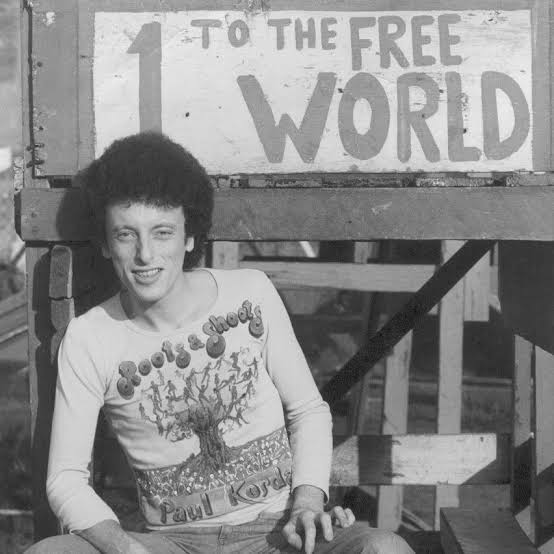
Paul Korda was an English songwriter, singer, musician, and actor. He wrote and performed music from the 1960s onwards, and his songs have been covered by artists such as Roger Daltrey, Dave Edmunds and Love Sculpture. A lost name for most people, The Strange Brew's Jason Barnard decided to track down and interview Paul - and the Korda Kronikles developed from there.
This is Part Two of Jason's four-part retelling of Paul's story.
The Korda Kronikles: Part Two, Denmark Street and the Swinging Sixties (1966-1971)
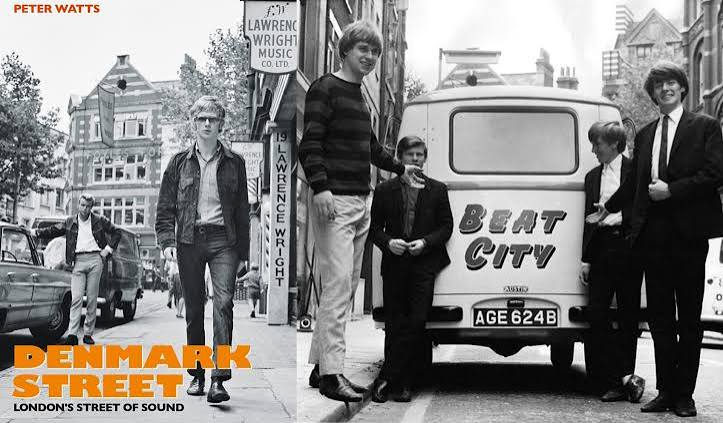 By the mid-1960s, London's Denmark Street had become the beating heart of British popular music, a cramped Soho thoroughfare where publishers' offices stacked vertically and creativity spilled horizontally into greasy spoon cafes and basement recording studios. Paul Korda arrived with impeccable lineage, classical training, and talent that would serve him well.
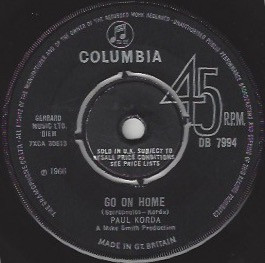
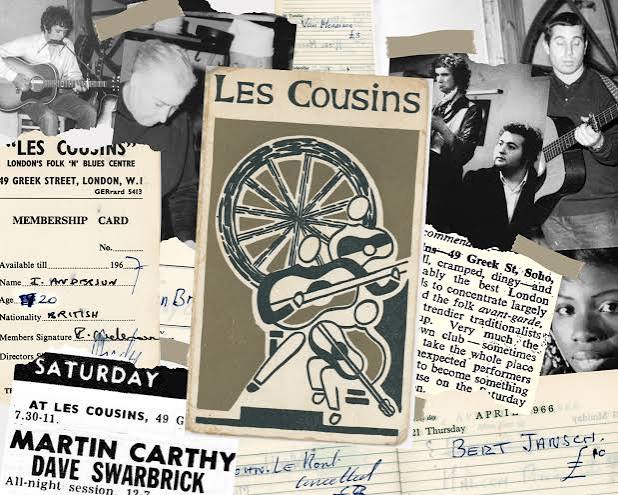 By the time he got to London, aged 17 it was claimed by EMI that he’d written 100 songs. Korda's first record, ‘Go on Home' was released two days shy of his 18th birthday on 26 August 1966. "I had a kind of publisher who had an office that he never used, and he let me use it as my way of having a foot in Denmark Street," Paul recalled. From this base, Paul surveyed the scene. The folk clubs were thriving, and Les Cousins on Greek Street became a regular haunt. There he'd encounter Al Stewart, already displaying the verbosity that would characterise his later storytelling epics. "I always liked him because he was so straightforward," Paul said. "He wasn't pretentious. You could joke with him about anything and he'd accept it." Though there were limits to patience. "He'd get into some war or something he'd written a song about, in the Russian army or something like that and we'd go, oh, Al's off again. We'll come back in 10 minutes."
His friendship with Cat Stevens deepened beyond Les Cousins. "Steve and I were best friends. We used to compare songs and just hang out at his house with his brother listening to and playing new stuff. He was with the same publisher as me." The bond extended to life's major moments: "He gave me his Mercedes for my wedding and his brother was my best man. I was like family."
But it was the chance encounters that defined this period. Paul's first meeting with David Bowie contained no hint of the cosmic transformation to come. "There he was dressed in a duffel coat, and his technical college look, you would never have guessed that he had such a great imagination," Paul remembered. They were both young songwriters navigating the same landscape, "comparing which song we were taking to what publisher." The ordinariness of the encounter made Bowie's subsequent reinventions all the more remarkable. "We hit it off right away."
The meeting with Elton John came through similarly serendipitous circumstances. Paul was performing solo at Harrow Technical College when "the manager of Bluesology came into the audience. I don't know from where and who told him. He said, I'd like to take you to meet my band, they're in the studio at Dick James Music." Paul accepted the invitation, unaware of what awaited. "I went with him and it was there that I helped move his keyboard downstairs to his band. It was Elton John, at that time he was called Reg."
What struck Paul was the young pianist's understanding of image malleability. "He didn't have any funny glasses or anything. So I thought well this guy knows how to change his image and make it to the big time just with that kind of capability." Even then, Paul recognised the distinction between artistry and commercial presentation. "I don't think I ever wanted to be that mainstream. I was quite happy just making music."
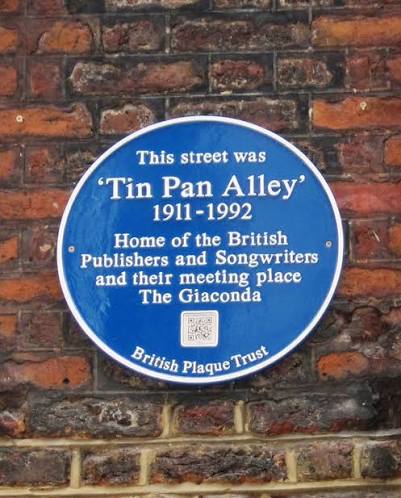 The Denmark Street ecology extended beyond the offices and studios. The Giaconda restaurant, "like a greasy spoon, steak and kidney pie and mashed kind of place," served as an unofficial musicians' canteen. One day brought an encounter that epitomised the era's casual collision of American and British rock royalty. "This guy rolls a huge bright pink Cadillac onto the pavement, because you couldn't park in that street with a car like that." Paul's response was characteristically direct. "I said, who the hell are you? And he said to me, oh yeah, I'm Jack Hammer and I wrote ‘Great Balls of Fire.’ I went, whoa, really?"
Paul's work with Immediate Records brought him into Andrew Loog Oldham's orbit at a crucial moment. "I recorded the first demo of Handbags and Gladrags," he noted matter-of-factly, referring to the Mike d'Abo song that would become a standard.
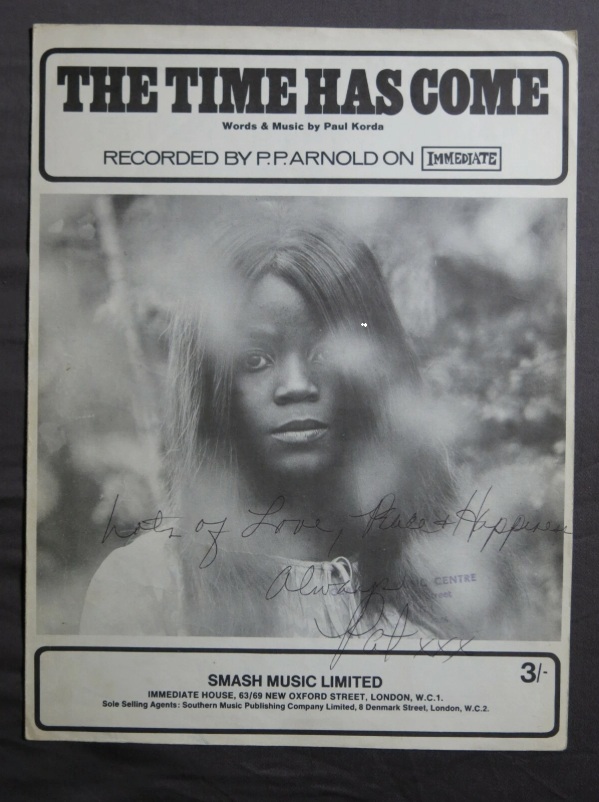 <-The Time Has Come songsheet
Paul's work with P.P. Arnold produced his first charting success when ‘The Time Has Come,’ released as a single in July 1967, reached number 47 in the UK charts. The collaboration showcased Paul's gift for writing emotionally resonant soul material for the former Ikette whom Andrew Loog Oldham had brought to London. The song's impact extended beyond Britain when an Italian version, "Se Perdo Te," recorded by Patty Pravo, reached number 6 in Italy. Yet Paul, like so many Immediate artists, wasn't paid, and, being a minor, his contract was voided.
Paul's insights into the personalities behind the rock god personas were revealing. "The more famous most people were, the more people tended to get on my nerves," he admitted. "It was the shyer ones that I liked." Jimi Hendrix exemplified this paradox. "Jimi Hendrix was a very shy guy and nice with it, you know, there was nothing overbearing about him at all."
The Hendrix encounter deserves its place in rock mythology. In November 1967, Paul assembled a band featuring drummer Ron Berg for a week-long residency at the Seven and a Half Club in Mayfair. On the opening night's afternoon, following the sound check, the band gathered in their dressing room when someone knocked at the door. Paul already knew Noel Redding from the Speakeasy, the nightclub where musicians congregated for its relaxed atmosphere and impromptu jam sessions.
When Hendrix arrived in his dressing room. They connected immediately over their similar afros. "We both looked at each other like, whoa, it's a spitting image and we kind of laughed at each other." When Hendrix explained he needed "a place to showcase to the music business," Paul offered his week-long residency without hesitation.
What followed was transformative. "When he got down on his guitar, like he was making love to the guitar, three people slithered off their seats and got on their knees, Paul McCartney, Pete Townshend, and Eric Clapton," Paul recalled, still awed decades later. "The three of them did that all at the same time. I'm standing right behind them thinking to myself, wow, Hendrix must be the high priest because they're all on their knees."
Paul's understanding of performance as liberation applied equally to Steve Marriott and Mick Jagger. "Even Steve Marriott was nice, he didn't, he might have had this cocky image when he was playing, but so did Jimi. It was like when they were playing it gave them a chance to get out of being them and play this role and why not?" Jagger particularly fascinated him. "He was a really shy guy. I met him many times and he was always very nice, a very kind of ex-public school boy and when he got on stage, being Mick, he was on fire."
In December 1967, tragedy struck when Paul's mother, Shirley Lenner, died in an accident. The loss was devastating, yet music provided solace as it had through previous hardships. Shortly afterward, EMI offered Paul a position as producer, marking a new chapter. In this period Paul’s most significant discovery came not in a studio but a kitchen. "Jon Anderson was working as cleaning up the dishes in the Shaftesbury Club, which was around the corner from the Marquee Club in London." Paul recognised something beyond Anderson's limited vocal power. "His voice was never very strong. He really didn't have a belting voice. But he did have that storyteller attitude."
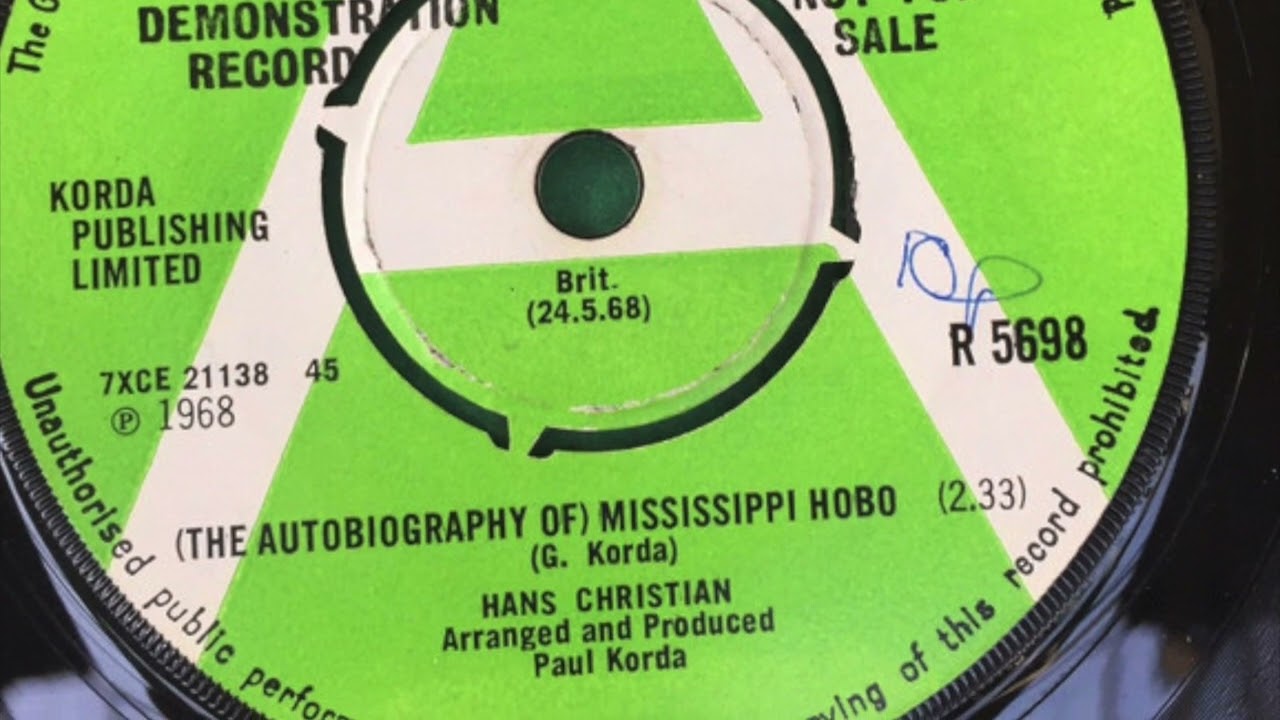 The generosity was characteristic. "I said he could come and stay at my place because he didn't have anywhere." Paul suggested Anderson record "Never My Love," creating one of the singer's first professional recordings. "I did a really good arrangement." Paul believes his influence extended further. "I was into these storybook types of orchestral arrangements. And he seemed like the perfect vehicle. I always thought he was a bit of a storyteller. He looked like one. Actually I think I inspired the orchestral arrangement types of Yes's beginnings."
The relationship soured over a photoshoot concept. Paul suggested Anderson "dress up in a sort of monk's outfit" for pictures at St. Paul's Cathedral to promote his "Autobiography of the Mississippi Hobo" single. "We went down there and immediately a couple of priests started giving sermons on people mocking the church." The incident created lasting tension, though Paul remained philosophical. "When he was the most down and out, I was the one who was there trying to help him, so I don't know, it's ridiculous."
Throughout this period, Paul maintained his anti-institutional stance even as he worked within the industry's structures. His orchestral ambitions found expression through EMI's resources. "It was fascinating for me to be able to book a 40 piece orchestra. And I would love arranging, you know, I'd go down to an arranger and I'd have him, I'd sing all the parts, and he would write them out."
His production work also enabled him to employ the Small Faces as his rhythm section. "I had them as my rhythm section on a lot of stuff. They were the best rhythm section around," Paul said with evident pride. "I had Kenny Jones, Ronnie Lane, and Ian McLagan. When they played something that I'd written, it always sounded great."
The Small Faces connection extended beyond the studio. Paul developed a close friendship with Steve Marriott that transcended professional boundaries. "He was a real close friend of mine. He used to give me his hand-me-downs for clothes." The generosity was specific and touching. "He would do a picture session with the Small Faces and he'd say, oh, I was wearing this great jacket, it would suit you perfectly, Paul. There you go. And he'd go and get a jacket and then I'd wear it for one of my EMI press photographs."
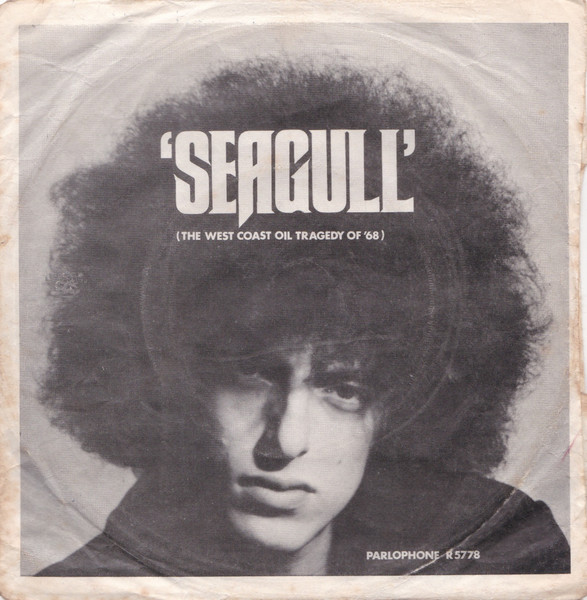
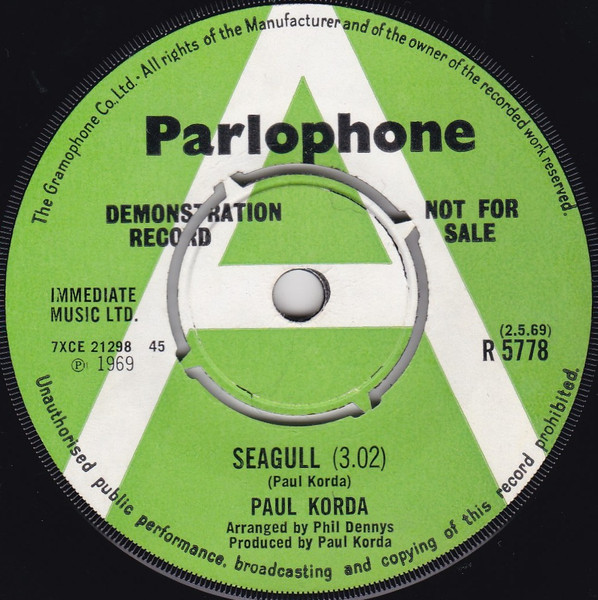 Paul was still writing with his environmental consciousness manifested in ‘Seagull (The West Coast Oil Tragedy of '68),’ a song that addressed ecological disaster with poetic gravity. "Seagull with oil on your wings can't fly away," he sang, the imagery stark and haunting. "It's like a poetry kind of classical stuff," Paul reflected, describing the song's hypnotic quality that prefigured his later orchestral ambitions. The track caught the attention of Love Sculpture, the Welsh rock trio featuring Dave Edmunds, who recorded their own interpretation. Paul spoke warmly of Edmunds decades later: "I love David. What a great person. Such a genuine, good-hearted man." The song represented Paul's ability to channel social and environmental concerns into his work long before such themes became commonplace in rock music, treating the oil spills as personal tragedy rendered through the fate of a single oiled bird unable to take flight.
Paul also championed young American singer Andy Forray, bringing him to an audition for the musical Hair to help advance his career. Forray secured a role, but unexpectedly, the producers asked Paul also to audition. On impulse, Paul sang ‘Amen’ and found himself offered a starring part. His initial refusal, citing existing commitments, met with such persistent persuasion from the producers that he eventually agreed to join the production as it opened at the Shaftesbury Theatre, London in September 1968.
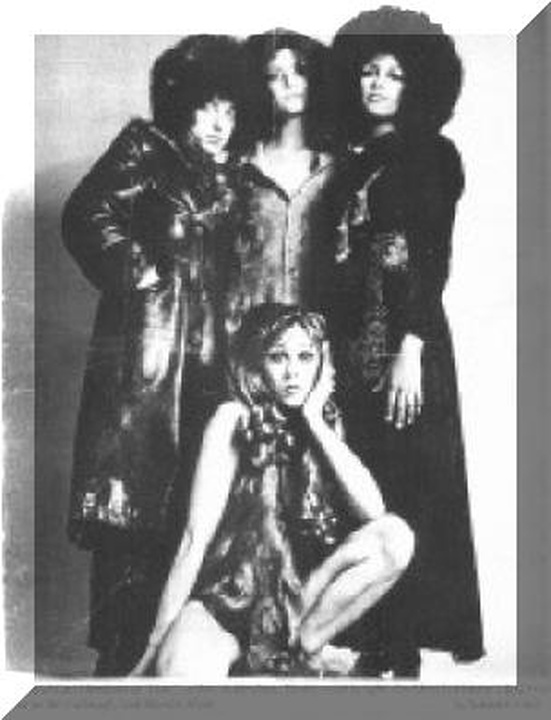 <- 1968 Hair cast – Paul Korda, Rohan McCullough, Marsha Hunt
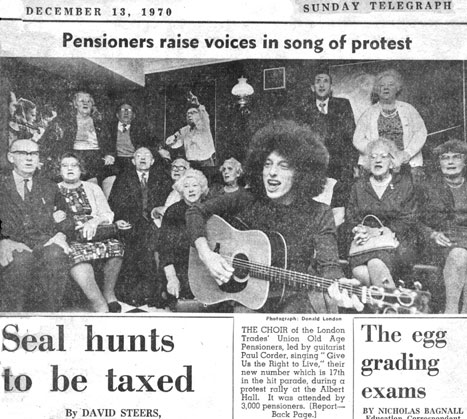 <-Sunday Telegraph, 13 December 1970
Paul's social activism found powerful expression in his song ‘Give Us the Right to Live,’ addressing the plight of Britain's elderly, who were struggling to survive on their government pensions.
He rehearsed and recorded the song with twenty pensioners, the oldest being over 80, with the single being released under the moniker, O.A.P's, for Famous Records . When Paul and the pensioners opened the Trade Union Congress at Royal Albert Hall, the impact was immediate. "Seven thousand people joined in singing after one chorus," he recalled with evident satisfaction. The spontaneous mass participation demonstrated that the counterculture's ideals of liberation extended beyond the young to encompass all those marginalised.
By 1971, the scene was shifting. The casual encounters that had defined the late 1960s were hardening into business relationships. Paul's solo work would come next, carrying forward the social consciousness but times were less idealistic. The door to Denmark Street remained open, but the world walking through it had fundamentally changed...
Part Three of The Korda Kronikles will appear in November - watch this space
For part one of Paul Korda's story, click here
Check out The Strange Brew click here
For part one of Paul Korda's story, click here
Check out The Strange Brew click here
All copyrights reserved 2026
www.fruitsdemerrecords.com
www.fruitsdemerrecords.com