
CLICK TO VISIT OUR SHOP LATEST NEWS DISCOGRAPHY MEMBERS CLUB BLOG CONTACT US HOME

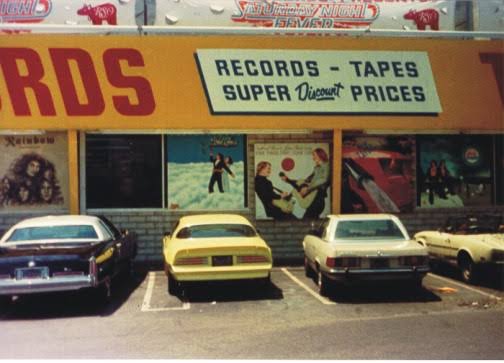
Henry Schneider writes for the expose.org website and has been buying and listening to records for a long, long time!
In 'Letter From America', Henry shares his musical journey...this time he discovers progressive rock

The Rise of the Progressives
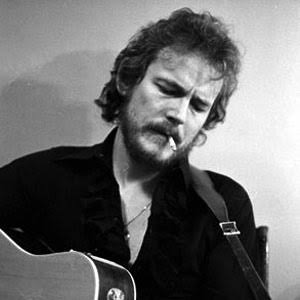 Before I leave the 1960s entirely, I need to mention Canada's national treasure, Gordon Lightfoot. While listening to FM radio out of New York City, I first heard songs like "Boss Man" and "Black Day in July." At a time when AM radio seemed trapped in a cycle of disposable singles, Lightfoot was something else entirely. His songs were rooted in history and storytelling.
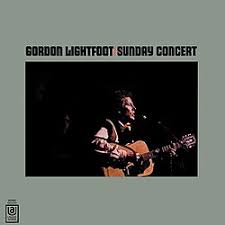 In 1969, while at the University of Virginia, I bought his live album Sunday Concert. The moment that changed everything was hearing "Canadian Railroad Trilogy." Here was a song that was part folk ballad, part history lesson, and part epic composition. Long before progressive rock bands were stretching songs across entire album sides, Lightfoot had shown that popular music could be ambitious without losing its emotional core.
He became far more commercially successful in the 1970s, but I still consider "The Wreck of the Edmund Fitzgerald" one of the high-water marks of his career.
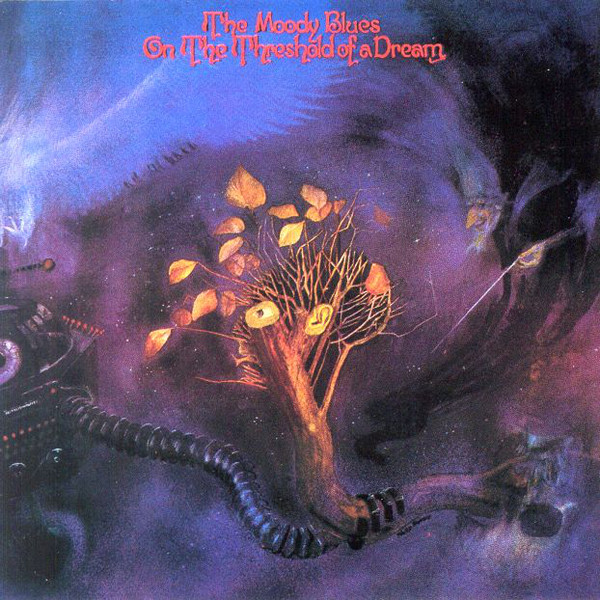 By this point I was already deeply immersed in the Moody Blues. I listened to Days of Future Passed and In Search of the Lost Chord, both of which convinced me that rock music could aspire to something beyond singles and dance tunes. In the spring of 1969, I happened to be in the local record store on the very day On the Threshold of a Dream was released. Naturally, I bought a copy immediately. Rather than taking it straight home, I stopped by the WUVA radio studio and persuaded the DJ to put my brand-new LP on the turntable and play it live on the air. For one brief afternoon, I was actually ahead of the college radio DJs. Not only had I already discovered the album, I was helping introduce it to the radio audience.
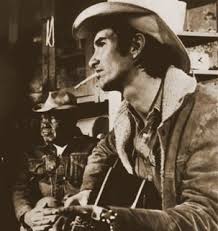 College radio was another revelation. WUVA exposed me to music that never would have appeared on commercial stations. One of the artists I discovered there was Townes Van Zandt. The first song I remember hearing was "Tecumseh Valley." Its stark beauty and heartbreaking storytelling made an immediate impression. It brings tears to my eyes every time I hear this song.
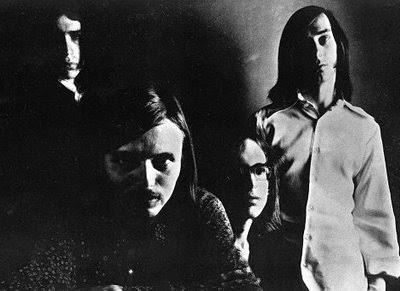 The week after the Kent State shootings in May 1970, I saw Townes perform live at UVA. Sharing the bill was Mandrake Memorial, a Philadelphia band that occupied the fascinating space between psychedelia and progressive rock. At the time I only knew them as another promising underground act. Years later I would discover that their guitarist Craig Anderton would go on to become editor of Polyphony and later Electronic Musician. Through connections with Craig and those magazines I would eventually attend the NAMM convention in Los Angeles during the 1980s. But that is getting ahead of the story.
Around this same time, I bought a reel-to-reel tape recorder and began recording FM broadcasts. Looking back, these tapes were primitive playlists decades before the term existed. Listening to them today reveals a musical landscape undergoing rapid change. Folk, blues, psychedelia, jazz, classical influences, and emerging progressive rock all existed side-by-side. The boundaries separating genres were beginning to dissolve.
What strikes me most is that the tapes were not collections of hit singles. Instead they captured a moment of transformation. Long-form tracks such as Iron Butterfly's "In-A-Gadda-Da-Vida" and the Chambers Brothers' "Time Has Come Today" sat beside Traffic, Tim Buckley, the Beatles, Cream, and Simon & Garfunkel. Even then I was less interested in where music had come from than where it might go next.
The local record stores played an equally important role in my education. Sometimes all it took was a striking album cover.
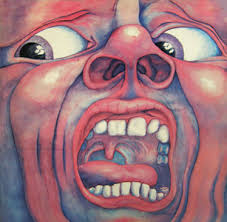 One day I saw King Crimson's In the Court of the Crimson King in a record shop near campus. That unforgettable screaming face on the cover practically grabbed me by the throat. I had no idea what the music sounded like, but I knew I had to have it. Dropping the needle on that album opened a doorway into the worlds of Robert Fripp, Greg Lake, and lyricist Pete Sinfield. Everything about it felt different. The Mellotron-drenched grandeur, shifting moods, jazz influences, and ambitious compositions suggested that rock music had suddenly grown up.
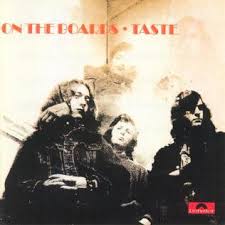 King Crimson was not alone. Around the same time I encountered On the Boards by Taste. Once again, curiosity generated by an album cover led me somewhere unexpected. The record introduced me to Rory Gallagher, one of the most distinctive blues-rock guitarists to emerge from Ireland. Gallagher possessed astonishing technique, but unlike many guitar heroes of the era, every note seemed to serve the song rather than his ego.
Rory became a favorite, and I would eventually see him perform twice in Houston during the late 1970s. In fact, my first date with the woman who would later become my wife was a Rory Gallagher concert. Not many people can say that a blues-rock guitarist helped launch a successful marriage.
Looking back at those years from 1968 through 1972, I realize that I was not simply accumulating records. I was following a trail of clues. A song heard on college radio led to an album. An intriguing album cover led to a new band. One artist led to another. The process was rarely linear. Folk existed beside psychedelia. Blues merged with jazz. Classical influences appeared in rock. Long songs became longer. Musicians were abandoning formulas and inventing new possibilities in real time.
There was another thread running through my musical education that I did not fully appreciate at the time. My uncle worked for RCA and had given my parents a 1960 LP of Sergei Prokofiev's soundtrack for Sergei Eisenstein's epic film Alexander Nevsky. As far as I can recall, my parents never played it. Eventually I adopted it into my own collection. At that point, the only Prokofiev work I knew was Peter and the Wolf, which most children encountered at one time or another. Dropping the needle onto Alexander Nevsky was a revelation. The music was powerful, dramatic, heroic, and cinematic on a scale I had never encountered before. Looking back, it is easy to hear why later progressive musicians found inspiration in classical composers. Although I would not have expressed it this way in 1970, Prokofiev's score possessed the same sense of grandeur and ambition that I was beginning to hear in bands like King Crimson, The Moody Blues, and Emerson, Lake & Palmer. I still own the soundtrack, and I periodically revisit Eisenstein's magnificent film on DVD. More than half a century later, both remain triumphant masterpieces.
For someone already fascinated by science fiction, electronics, and anything that challenged conventional boundaries, it was impossible not to be captivated.
The progressives had arrived, and I was more than ready to follow them wherever they led.
more to come...
Check out Henry's previous article click here
All copyrights reserved 2026
www.fruitsdemerrecords.com
www.fruitsdemerrecords.com