
CLICK TO VISIT OUR SHOP LATEST NEWS DISCOGRAPHY MEMBERS CLUB BLOG CONTACT US HOME

TimeLord Michalis...Greek radio producer (since 1995), record reviewer, fanzine editor, concert organizer, record label owner, and analogue devotee—lives in the countryside near the mythical hideouts of Pan. A lifelong collector and music obsessive, he breathes vinyl and remains hopelessly, beautifully addicted to the psychedelic spirit of the 1960s with a mission in a never-ending quest for 60's Psychedelicism in today's world.

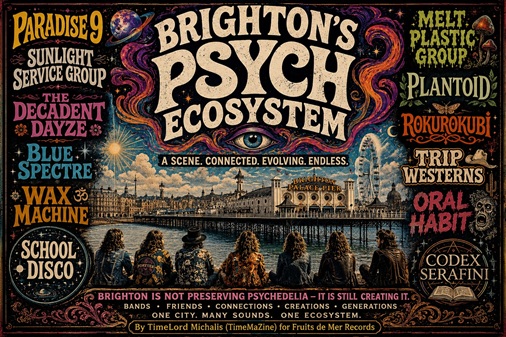
Brighton's Psych Ecosystem - Part 2
For Part One of TM's article
click here
BRIGHTON'S PSYCH ECOSYSTEM
Is Brighton the Promised Land of Modern Psychedelia?
A Personal Journey Through One of Britain's Most Fascinating Underground Scenes
By TimeLord Michalis (Compiled during early August, 2026)
"Sometimes a scene does not reveal itself through geography, but through connections, sounds and the invisible threads between artists."
Prologue
I have to make one thing clear from the very beginning: I don't live in Brighton. In fact, I have never even been there. I know very little about the city's history, its venues, or the everyday life that makes this place what it is. Yet, over the past few years, one thing has become impossible for me to ignore.
Every now and then, I would discover another remarkable psych-related band. I would play the record, fall in love with the music, check where they came from... and there it was again: Brighton.
At first, I thought it was pure coincidence. Two bands? Fair enough. Three? Still possible. But after discovering eight, nine, or even more outstanding groups from the same corner of southern England, I began to wonder whether something much bigger was happening beneath the surface. Was Brighton quietly nurturing one of the most exciting underground Psych communities of the 21st century?
Brighton's relationship with alternative culture, however, did not begin with the current generation of psychedelic explorers. Although the city never developed a clearly defined '60s psychedelic movement comparable to London, Canterbury or other legendary British scenes, it has long been associated with artistic freedom, experimentation and a strong underground spirit. During the second half of the 1960s, bands such as Mike Stuart Span and their later incarnation Leviathan hinted at the city's early connection with Britain's emerging psychedelic and progressive underground. From those pioneering days to the space-rock explorations of Mandragora in the 1980s, and later to the countless independent artists who followed, Brighton gradually became a place where musicians could experiment without boundaries. Perhaps the current Psych wave is not a sudden explosion, but rather the latest chapter of a much older tradition of creativity, curiosity and non-conformity.
This article is not intended to be a definitive history of the Brighton scene. Instead, it is the diary of a record collector, radio producer and lifelong psychedelic obsessive who kept following the same musical trail until it eventually led across the English Channel. Over the following pages, we will explore a selection of bands that, despite their very different personalities, share the same adventurous spirit, DIY mentality and refusal to accept musical boundaries. Some lean towards Garage Rock, others embrace Krautrock, Jazz, Progressive Rock, Heavy Psych, Space Rock or Surf Rock, yet together they contribute to a scene that remains vibrant, creative and refreshingly unpredictable.
So... is Brighton really the Promised Land of contemporary Psychedelia?
I honestly don't know.
But after listening to all these bands, I certainly believe the question deserves to be asked…
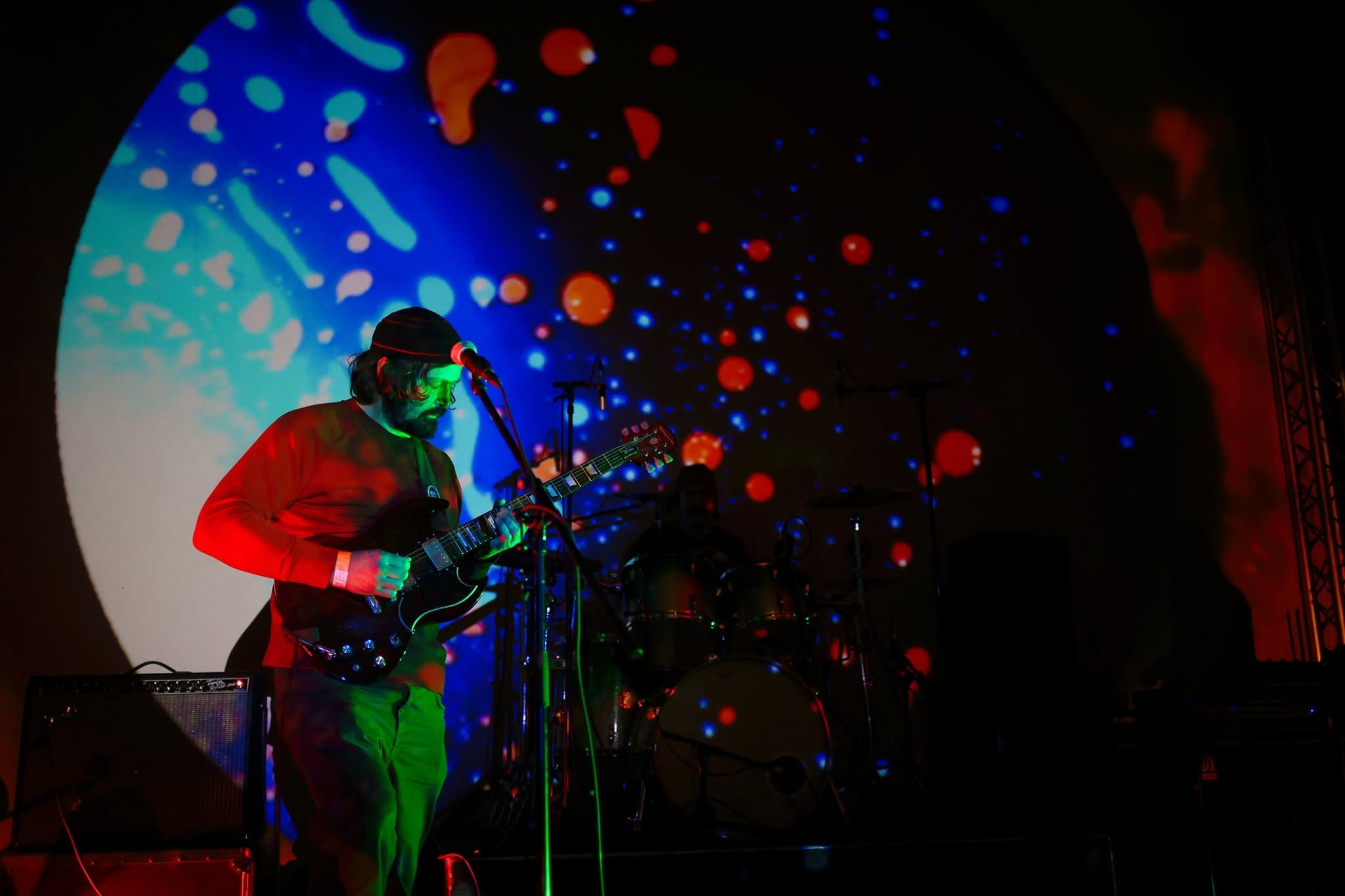 Melt Plastic Group
A living example of how creative ideas continue to flow from one generation of Brighton musicians to the next
Emerging from Brighton's vibrant underground scene, Melt Plastic Group represent one of the most experimental and unpredictable chapters of the city's modern psychedelic movement. Built around the creative vision of Willy A. Robinson (vocals, guitar, harmonica and keyboards), the band developed a highly personal sound blending Psychedelic Rock, Krautrock, Folk, Garage, Progressive influences and experimental Rock, a combination that allows the band to move freely between heavy fuzz-driven passages, cosmic atmospheres, folk-inspired moments and Krautrock-influenced repetition.
The core line-up features Willy A. Robinson, Jessica FF Lazzeri (bass), and GaX (drums, vocals, keys and guitar). Their debut album Black Rock, Yellow Room (2020) introduced listeners to their strange and fascinating universe. This was followed by The Birdman Explodes (2021) and Hooh (2022), releases that continued to expand their musical vocabulary while maintaining the band's distinctive identity.
Within Brighton's Psych Ecosystem, Melt Plastic Group represent the living connections between different generations of musicians and prove that Psychedelia remains a place of exploration, discovery and imagination rather than repetition, keeping Brighton's underground constantly evolving.
Listen & discover: Melt Plastic Group Bandcamp
click here
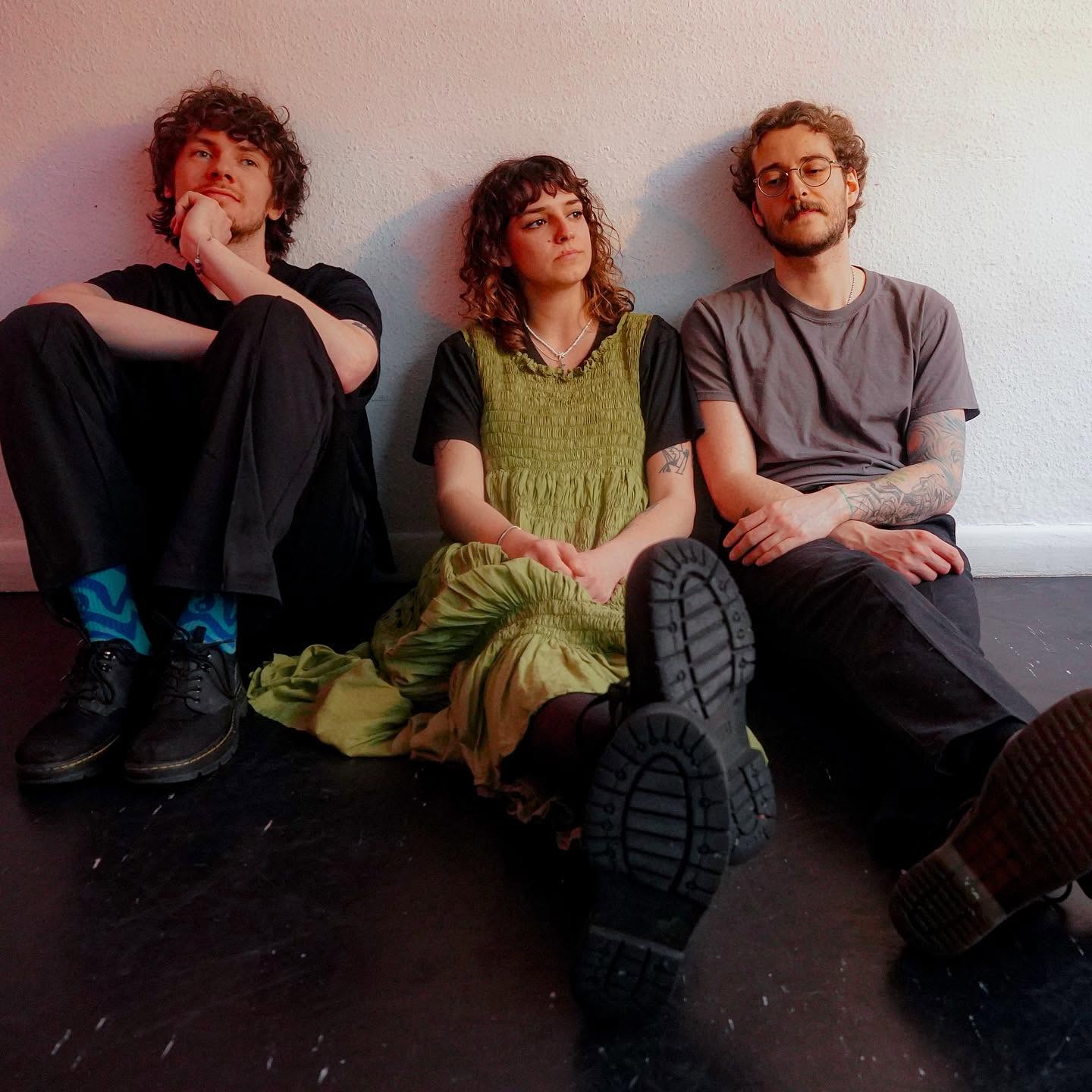 Plantoid
The progressive future of Brighton's ever-evolving Psych landscape
Representing one of the newest generations of Brighton's experimental underground, Plantoid demonstrate how the city's psychedelic spirit continues to evolve beyond traditional boundaries. Formed in 2019, the band emerged from the creative partnership of Chloe Spence (vocals, guitar and keys) and Tom Coyne (guitar and composition), later expanding into a full group with Louis Bradshaw (drums) and Bernardo Larisch (bass). Together, they developed a sound where Progressive Rock, Jazz, Psychedelia, Fusion, Folk influences and experimental music constantly interact, creating a musical landscape that is complex, adventurous and always moving forward.
The band's early incarnation began under the name Mangö, with the release of their debut EP Mangö (2019). After evolving into Plantoid, the band continued to refine their identity, culminating in their debut full-length album Terrapath (2024). Their compositions carry echoes of the adventurous spirit of the late '60s and '70s — from Progressive Rock pioneers to Jazz improvisation and psychedelic experimentation — yet they never feel like a nostalgic tribute, with a genuine desire to explore unknown territories.
Within Brighton's Psych Ecosystem, Plantoid represent the progressive future of the scene. By combining the adventurous spirit of the past with a contemporary vision, they prove that Psych continues to evolve through young musicians willing to explore new structures, ideas and musical possibilities.
Listen & discover: Plantoid Bandcamp
click here
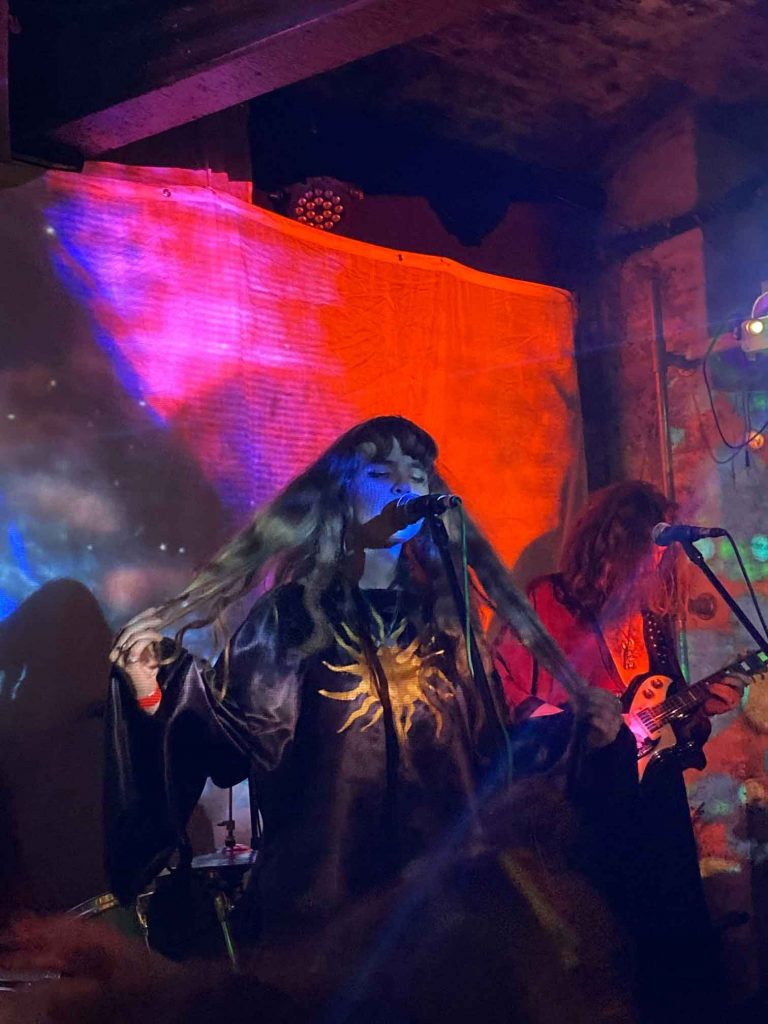 Rokurokubi
Where mysticism, folklore and modern Psychedelia finally become one
Among the most fascinating acts to emerge from Brighton's contemporary psychedelic underground, Rokurokubi occupy a truly unique position. The brainchild of multi-instrumentalist Rose Dutton (also recording under the name Rose Io), the project began as a deeply personal solo journey before expanding into a collaborative universe with Edmund Io and a selection of guest musicians. Through her visionary approach, Rose Dutton has created a world where Acid Folk, Psychedelic Rock, Freak Folk and experimental soundscapes merge into intricate, hallucinatory narratives. Inspired by Japanese folklore — the name Rokurokubi referring to the mythical shape-shifting creatures of the same name — the project explores a space where mythology, mysticism and modern Psychedelia naturally become one.
Rokurokubi's music thrives on contrast: delicate folk storytelling meets acid-drenched psychedelic exploration, fragile melodies transform into expansive sonic hallucinations. The album Iris, Flower Of Violence (2021), released through Time Spun Records, stands as a remarkable example of modern Psychedelic Folk, a deeply atmospheric experience. Over time, the project evolved into a full live incarnation featuring Anna Dodge (vocals, guitar), Kerry Bennett (bass, vocals), Harriet Riley (drums, percussion), and Martha Rose (violin, keyboards, vocals), allowing Rose Dutton's original vision to expand into a collective psychedelic experience.
Within Brighton's Psych Ecosystem, Rokurokubi represent the meeting point between ancient folklore and contemporary Psychedelia. Previously featured in my article "Sisters of the Cosmic Fuzz" (check here), they perfectly embody a scene where imagination, individuality, and experimentation create entirely new musical worlds.
Listen & discover: Rokurokubi Bandcamp (Time Spun Records)
click here
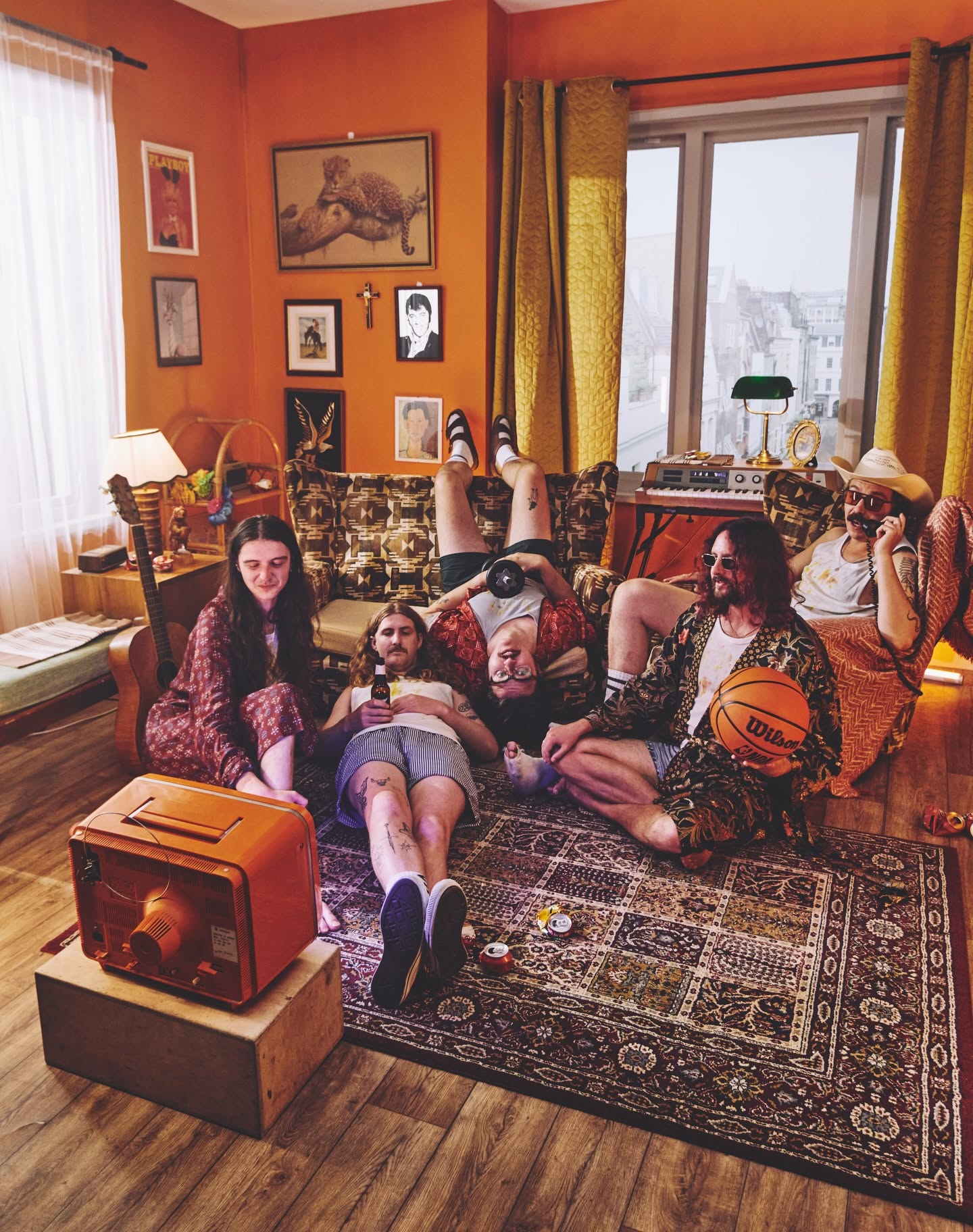 Trip Westerns
Where Rock'n'Roll roots, Blues influences and Psychedelic horizons collide
Representing one of the newest generations of Brighton's underground explorers, Trip Westerns demonstrate that the city's psychedelic ecosystem continues to grow with fresh energy while maintaining a strong connection with the past. Formed in Brighton during the early 2020s, the five-piece band developed a distinctive sound where Rock'n'Roll, Blues, Garage Rock, and Psychedelia meet the cinematic atmosphere of vintage western soundtracks.
Built around the songwriting partnership of Harrison Baird-Whitman and Joseph Devine, Trip Westerns create music driven by energetic guitars, powerful rhythms, raw vocals, and a strong sense of storytelling. Their recorded journey began with the self-titled Trip Westerns EP (2023), which introduced their distinctive blend of Rock'n'Roll energy, Garage attitude, Blues influences, and psychedelic atmosphere, followed by Post Hunk (2025), further expanding their musical universe.
Within Brighton's Psych Ecosystem, Trip Westerns represent the roots-based and energetic side of contemporary Psychedelia. By blending Rock'n'Roll, Blues, Garage and psychedelic influences, they prove that the spirit of exploration can also be driven by rhythm, melody and the timeless power of rock music.
Listen & discover: Trip Westerns Bandcamp
click here
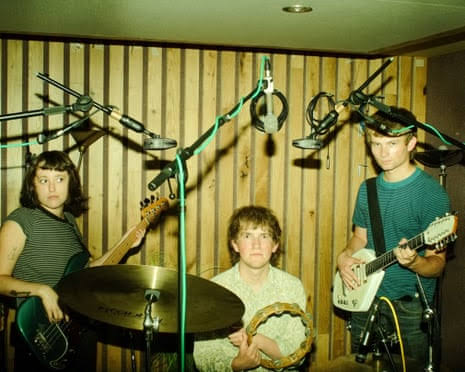 Oral Habit
The raw Garage-Psych energy proving that Brighton's underground is still evolving
Representing one of the newest and most uncompromising voices within Brighton's contemporary underground, and emerging from the city's independent scene in the mid-2020s, Oral Habit channel a restless and confrontational energy, blending Garage Rock, Psychedelic Rock, Punk attitude and experimental influences into a raw and unpredictable sonic attack.
Originally the home-recording project of Charlie Hales, Oral Habit gradually evolved into a full band with Felix Hales on drums and Tippi Lewis on bass and vocals. Together, the trio created a distinctive sound built around distorted guitars, primitive riffs, explosive rhythms, feedback, hypnotic repetition, and an uncompromising DIY spirit. Their recorded journey began with Cardiovascular Spectacular (2024), followed by the EP Garage Frock! (2025), where the band expanded their sonic vocabulary through heavier fuzz, rawer textures and more adventurous experimentation. Their debut full-length album A Broken Chord (2026) further developed this unique musical universe, combining elements of '60s freakbeat, Krautrock, Punk, and Psychedelia into a constantly shifting and unpredictable experience.
Within Brighton's Psych Ecosystem, Oral Habit represent the raw, rebellious and future-facing side of the scene. Their Garage-Psych attack reminds us that Psychedelia has always been about mutation, energy and breaking boundaries, proving that the underground spirit remains alive through constant reinvention.
Listen & discover: Oral Habit Bandcamp
click here
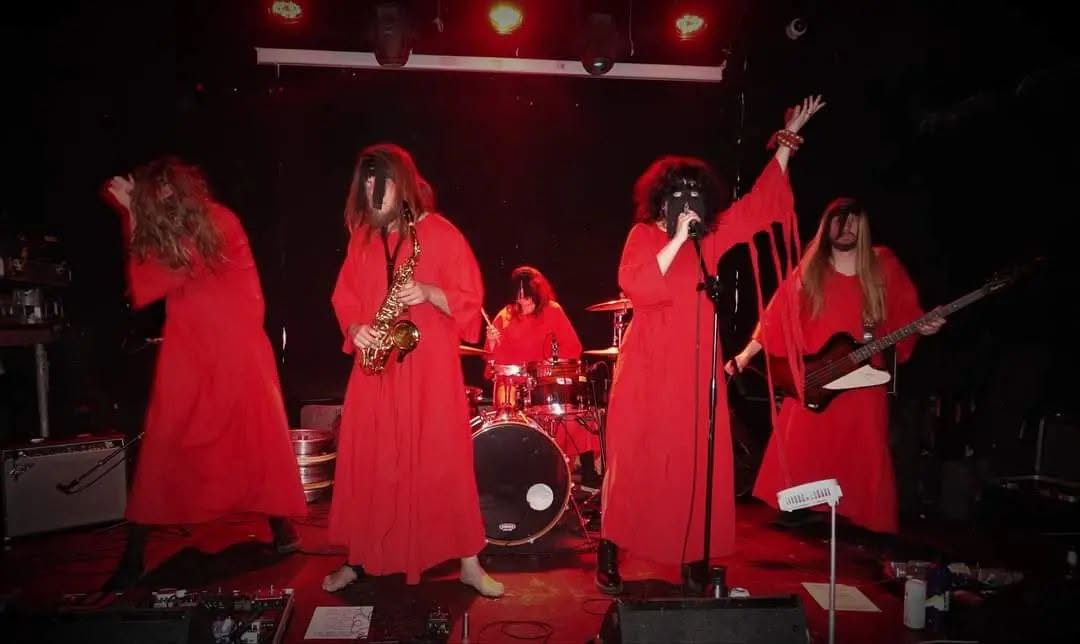 Codex Serafini
Perhaps the boldest reminder that Psychedelia is still capable of discovering entirely new worlds
Closing this journey through Brighton's psychedelic underground, Codex Serafini feel like the perfect final chapter. Among the most mysterious and uncompromising acts connected with the wider scene, they do not simply create Psychedelic Rock — they build an entire universe around it. Formed in 2019 and based in Sussex, the band describe themselves as a "Saturnian Ritualistic" collective, a concept that perfectly reflects their philosophy: music as exploration, transformation and a form of cosmic communication.
Operating less like a conventional rock group and more like a five-headed psychedelic entity — the "5 Red Psych Tunics" — Codex Serafini channel influences from Krautrock, Space Rock, Heavy Psychedelia, Doom, Dark Psych, Goth, Avant-Punk and free-form experimentation. Their journey began with the cassette release Serpents Of Enceladus (2020), followed by Invisible Landscape (2021), before the monumental debut album The Imprecation Of Anima (2023) established them as one of the most original and adventurous psychedelic acts to emerge from the UK underground. Their live album God's Spit captured the almost ritualistic intensity of their performances, while Mother, Give Your Children Sanity (2025) pushed their unique musical language even further into darker and more experimental territories.
Within Brighton's Psych Ecosystem, Codex Serafini represent the point where Psychedelia transcends boundaries and enters unknown territories. Their ritualistic and uncompromising vision proves that the genre is still capable of mutation, evolution, and surprise. The journey through Brighton does not truly end here — it simply disappears into another dimension.
Listen & discover: Codex Serafini Bandcamp
click here
Brighton's Psych Ecosystem
Epilogue
So, is Brighton the Promised Land of Psych?
After exploring these bands, the answer seems to exist somewhere between coincidence and destiny. I do not live in Brighton, I have never walked through its streets, and I do not pretend to know every detail of its history. What I do know is that, over the years, this relatively small corner of England has produced an extraordinary number of fascinating Psych artists — enough to transform curiosity into a journey of discovery.
The true magic of Brighton lies not only in the number of bands, but in the existence of a living Psych Ecosystem: a place where musicians move between projects, ideas are exchanged, and creativity flows naturally from one generation to the next. From cosmic explorations and folk visions to progressive adventures, garage explosions and ritualistic soundscapes, Brighton's Psychedelia refuses to follow a single path.
And maybe the answer to the original question is not whether Brighton is the Promised Land of Psych, but something even more fascinating: it has become one of the places where Psychedelia continues to breathe, evolve and surprise us.
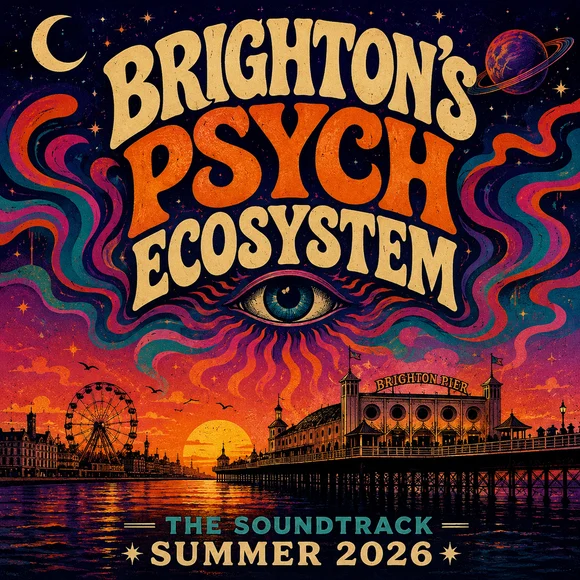 Of course, an article about Psychedelia would not be complete without the music itself...
To accompany this journey through Brighton's underground scene, I have created a special Mixcloud mix featuring one representative track from each one of the bands explored in this article.
This is not intended to be a "best of" compilation, but rather a sonic map — a small introduction to the different colours, influences and personalities that make up Brighton's fascinating psychedelic ecosystem.
So turn up the volume, close your eyes, and let the journey begin…
click here
and here are a few YouTube videos of bands featured in Part Two of Brighton's Psych Ecosystem for you to enjoy...
For Part One of TM's article on Brighton
click here
For Part One of TM's previous article - on the impact of female lead singers on psychedelia -
click here
Check out Timelord Michalis' Timemazine click here
BRIGHTON'S PSYCH ECOSYSTEM
Is Brighton the Promised Land of Modern Psychedelia?
A Personal Journey Through One of Britain's Most Fascinating Underground Scenes By TimeLord Michalis (Compiled during early August, 2026)
"Sometimes a scene does not reveal itself through geography, but through connections, sounds and the invisible threads between artists."
I have to make one thing clear from the very beginning: I don't live in Brighton. In fact, I have never even been there. I know very little about the city's history, its venues, or the everyday life that makes this place what it is. Yet, over the past few years, one thing has become impossible for me to ignore.
Every now and then, I would discover another remarkable psych-related band. I would play the record, fall in love with the music, check where they came from... and there it was again: Brighton.
At first, I thought it was pure coincidence. Two bands? Fair enough. Three? Still possible. But after discovering eight, nine, or even more outstanding groups from the same corner of southern England, I began to wonder whether something much bigger was happening beneath the surface. Was Brighton quietly nurturing one of the most exciting underground Psych communities of the 21st century?
Brighton's relationship with alternative culture, however, did not begin with the current generation of psychedelic explorers. Although the city never developed a clearly defined '60s psychedelic movement comparable to London, Canterbury or other legendary British scenes, it has long been associated with artistic freedom, experimentation and a strong underground spirit. During the second half of the 1960s, bands such as Mike Stuart Span and their later incarnation Leviathan hinted at the city's early connection with Britain's emerging psychedelic and progressive underground. From those pioneering days to the space-rock explorations of Mandragora in the 1980s, and later to the countless independent artists who followed, Brighton gradually became a place where musicians could experiment without boundaries. Perhaps the current Psych wave is not a sudden explosion, but rather the latest chapter of a much older tradition of creativity, curiosity and non-conformity.
This article is not intended to be a definitive history of the Brighton scene. Instead, it is the diary of a record collector, radio producer and lifelong psychedelic obsessive who kept following the same musical trail until it eventually led across the English Channel. Over the following pages, we will explore a selection of bands that, despite their very different personalities, share the same adventurous spirit, DIY mentality and refusal to accept musical boundaries. Some lean towards Garage Rock, others embrace Krautrock, Jazz, Progressive Rock, Heavy Psych, Space Rock or Surf Rock, yet together they contribute to a scene that remains vibrant, creative and refreshingly unpredictable.
So... is Brighton really the Promised Land of contemporary Psychedelia?
I honestly don't know.
But after listening to all these bands, I certainly believe the question deserves to be asked…
Melt Plastic Group
A living example of how creative ideas continue to flow from one generation of Brighton musicians to the next
Emerging from Brighton's vibrant underground scene, Melt Plastic Group represent one of the most experimental and unpredictable chapters of the city's modern psychedelic movement. Built around the creative vision of Willy A. Robinson (vocals, guitar, harmonica and keyboards), the band developed a highly personal sound blending Psychedelic Rock, Krautrock, Folk, Garage, Progressive influences and experimental Rock, a combination that allows the band to move freely between heavy fuzz-driven passages, cosmic atmospheres, folk-inspired moments and Krautrock-influenced repetition.
The core line-up features Willy A. Robinson, Jessica FF Lazzeri (bass), and GaX (drums, vocals, keys and guitar). Their debut album Black Rock, Yellow Room (2020) introduced listeners to their strange and fascinating universe. This was followed by The Birdman Explodes (2021) and Hooh (2022), releases that continued to expand their musical vocabulary while maintaining the band's distinctive identity.
Within Brighton's Psych Ecosystem, Melt Plastic Group represent the living connections between different generations of musicians and prove that Psychedelia remains a place of exploration, discovery and imagination rather than repetition, keeping Brighton's underground constantly evolving.
Listen & discover: Melt Plastic Group Bandcamp
click here
Plantoid
The progressive future of Brighton's ever-evolving Psych landscape
Representing one of the newest generations of Brighton's experimental underground, Plantoid demonstrate how the city's psychedelic spirit continues to evolve beyond traditional boundaries. Formed in 2019, the band emerged from the creative partnership of Chloe Spence (vocals, guitar and keys) and Tom Coyne (guitar and composition), later expanding into a full group with Louis Bradshaw (drums) and Bernardo Larisch (bass). Together, they developed a sound where Progressive Rock, Jazz, Psychedelia, Fusion, Folk influences and experimental music constantly interact, creating a musical landscape that is complex, adventurous and always moving forward.
The band's early incarnation began under the name Mangö, with the release of their debut EP Mangö (2019). After evolving into Plantoid, the band continued to refine their identity, culminating in their debut full-length album Terrapath (2024). Their compositions carry echoes of the adventurous spirit of the late '60s and '70s — from Progressive Rock pioneers to Jazz improvisation and psychedelic experimentation — yet they never feel like a nostalgic tribute, with a genuine desire to explore unknown territories.
Within Brighton's Psych Ecosystem, Plantoid represent the progressive future of the scene. By combining the adventurous spirit of the past with a contemporary vision, they prove that Psych continues to evolve through young musicians willing to explore new structures, ideas and musical possibilities.
Listen & discover: Plantoid Bandcamp
click here
Rokurokubi
Where mysticism, folklore and modern Psychedelia finally become one
Among the most fascinating acts to emerge from Brighton's contemporary psychedelic underground, Rokurokubi occupy a truly unique position. The brainchild of multi-instrumentalist Rose Dutton (also recording under the name Rose Io), the project began as a deeply personal solo journey before expanding into a collaborative universe with Edmund Io and a selection of guest musicians. Through her visionary approach, Rose Dutton has created a world where Acid Folk, Psychedelic Rock, Freak Folk and experimental soundscapes merge into intricate, hallucinatory narratives. Inspired by Japanese folklore — the name Rokurokubi referring to the mythical shape-shifting creatures of the same name — the project explores a space where mythology, mysticism and modern Psychedelia naturally become one.
Rokurokubi's music thrives on contrast: delicate folk storytelling meets acid-drenched psychedelic exploration, fragile melodies transform into expansive sonic hallucinations. The album Iris, Flower Of Violence (2021), released through Time Spun Records, stands as a remarkable example of modern Psychedelic Folk, a deeply atmospheric experience. Over time, the project evolved into a full live incarnation featuring Anna Dodge (vocals, guitar), Kerry Bennett (bass, vocals), Harriet Riley (drums, percussion), and Martha Rose (violin, keyboards, vocals), allowing Rose Dutton's original vision to expand into a collective psychedelic experience.
Within Brighton's Psych Ecosystem, Rokurokubi represent the meeting point between ancient folklore and contemporary Psychedelia. Previously featured in my article "Sisters of the Cosmic Fuzz" (check here), they perfectly embody a scene where imagination, individuality, and experimentation create entirely new musical worlds.
Listen & discover: Rokurokubi Bandcamp (Time Spun Records)
click here
Trip Westerns
Where Rock'n'Roll roots, Blues influences and Psychedelic horizons collide
Representing one of the newest generations of Brighton's underground explorers, Trip Westerns demonstrate that the city's psychedelic ecosystem continues to grow with fresh energy while maintaining a strong connection with the past. Formed in Brighton during the early 2020s, the five-piece band developed a distinctive sound where Rock'n'Roll, Blues, Garage Rock, and Psychedelia meet the cinematic atmosphere of vintage western soundtracks.
Built around the songwriting partnership of Harrison Baird-Whitman and Joseph Devine, Trip Westerns create music driven by energetic guitars, powerful rhythms, raw vocals, and a strong sense of storytelling. Their recorded journey began with the self-titled Trip Westerns EP (2023), which introduced their distinctive blend of Rock'n'Roll energy, Garage attitude, Blues influences, and psychedelic atmosphere, followed by Post Hunk (2025), further expanding their musical universe.
Within Brighton's Psych Ecosystem, Trip Westerns represent the roots-based and energetic side of contemporary Psychedelia. By blending Rock'n'Roll, Blues, Garage and psychedelic influences, they prove that the spirit of exploration can also be driven by rhythm, melody and the timeless power of rock music.
Listen & discover: Trip Westerns Bandcamp
click here
Oral Habit
The raw Garage-Psych energy proving that Brighton's underground is still evolving
Representing one of the newest and most uncompromising voices within Brighton's contemporary underground, and emerging from the city's independent scene in the mid-2020s, Oral Habit channel a restless and confrontational energy, blending Garage Rock, Psychedelic Rock, Punk attitude and experimental influences into a raw and unpredictable sonic attack.
Originally the home-recording project of Charlie Hales, Oral Habit gradually evolved into a full band with Felix Hales on drums and Tippi Lewis on bass and vocals. Together, the trio created a distinctive sound built around distorted guitars, primitive riffs, explosive rhythms, feedback, hypnotic repetition, and an uncompromising DIY spirit. Their recorded journey began with Cardiovascular Spectacular (2024), followed by the EP Garage Frock! (2025), where the band expanded their sonic vocabulary through heavier fuzz, rawer textures and more adventurous experimentation. Their debut full-length album A Broken Chord (2026) further developed this unique musical universe, combining elements of '60s freakbeat, Krautrock, Punk, and Psychedelia into a constantly shifting and unpredictable experience.
Within Brighton's Psych Ecosystem, Oral Habit represent the raw, rebellious and future-facing side of the scene. Their Garage-Psych attack reminds us that Psychedelia has always been about mutation, energy and breaking boundaries, proving that the underground spirit remains alive through constant reinvention.
Listen & discover: Oral Habit Bandcamp
click here
Codex Serafini
Perhaps the boldest reminder that Psychedelia is still capable of discovering entirely new worlds
Closing this journey through Brighton's psychedelic underground, Codex Serafini feel like the perfect final chapter. Among the most mysterious and uncompromising acts connected with the wider scene, they do not simply create Psychedelic Rock — they build an entire universe around it. Formed in 2019 and based in Sussex, the band describe themselves as a "Saturnian Ritualistic" collective, a concept that perfectly reflects their philosophy: music as exploration, transformation and a form of cosmic communication.
Operating less like a conventional rock group and more like a five-headed psychedelic entity — the "5 Red Psych Tunics" — Codex Serafini channel influences from Krautrock, Space Rock, Heavy Psychedelia, Doom, Dark Psych, Goth, Avant-Punk and free-form experimentation. Their journey began with the cassette release Serpents Of Enceladus (2020), followed by Invisible Landscape (2021), before the monumental debut album The Imprecation Of Anima (2023) established them as one of the most original and adventurous psychedelic acts to emerge from the UK underground. Their live album God's Spit captured the almost ritualistic intensity of their performances, while Mother, Give Your Children Sanity (2025) pushed their unique musical language even further into darker and more experimental territories.
Within Brighton's Psych Ecosystem, Codex Serafini represent the point where Psychedelia transcends boundaries and enters unknown territories. Their ritualistic and uncompromising vision proves that the genre is still capable of mutation, evolution, and surprise. The journey through Brighton does not truly end here — it simply disappears into another dimension.
Listen & discover: Codex Serafini Bandcamp
click here
Brighton's Psych Ecosystem
Epilogue
So, is Brighton the Promised Land of Psych?
After exploring these bands, the answer seems to exist somewhere between coincidence and destiny. I do not live in Brighton, I have never walked through its streets, and I do not pretend to know every detail of its history. What I do know is that, over the years, this relatively small corner of England has produced an extraordinary number of fascinating Psych artists — enough to transform curiosity into a journey of discovery.
The true magic of Brighton lies not only in the number of bands, but in the existence of a living Psych Ecosystem: a place where musicians move between projects, ideas are exchanged, and creativity flows naturally from one generation to the next. From cosmic explorations and folk visions to progressive adventures, garage explosions and ritualistic soundscapes, Brighton's Psychedelia refuses to follow a single path.
And maybe the answer to the original question is not whether Brighton is the Promised Land of Psych, but something even more fascinating: it has become one of the places where Psychedelia continues to breathe, evolve and surprise us.
Of course, an article about Psychedelia would not be complete without the music itself...
To accompany this journey through Brighton's underground scene, I have created a special Mixcloud mix featuring one representative track from each one of the bands explored in this article.
This is not intended to be a "best of" compilation, but rather a sonic map — a small introduction to the different colours, influences and personalities that make up Brighton's fascinating psychedelic ecosystem.
So turn up the volume, close your eyes, and let the journey begin…
click here
and here are a few YouTube videos of bands featured in Part Two of Brighton's Psych Ecosystem for you to enjoy...
For Part One of TM's article on Brighton
click here
For Part One of TM's previous article - on the impact of female lead singers on psychedelia -
click here
Check out Timelord Michalis' Timemazine click here
The core line-up features Willy A. Robinson, Jessica FF Lazzeri (bass), and GaX (drums, vocals, keys and guitar). Their debut album Black Rock, Yellow Room (2020) introduced listeners to their strange and fascinating universe. This was followed by The Birdman Explodes (2021) and Hooh (2022), releases that continued to expand their musical vocabulary while maintaining the band's distinctive identity.
Within Brighton's Psych Ecosystem, Melt Plastic Group represent the living connections between different generations of musicians and prove that Psychedelia remains a place of exploration, discovery and imagination rather than repetition, keeping Brighton's underground constantly evolving.
Listen & discover: Melt Plastic Group Bandcamp click here
Plantoid
The progressive future of Brighton's ever-evolving Psych landscape
Representing one of the newest generations of Brighton's experimental underground, Plantoid demonstrate how the city's psychedelic spirit continues to evolve beyond traditional boundaries. Formed in 2019, the band emerged from the creative partnership of Chloe Spence (vocals, guitar and keys) and Tom Coyne (guitar and composition), later expanding into a full group with Louis Bradshaw (drums) and Bernardo Larisch (bass). Together, they developed a sound where Progressive Rock, Jazz, Psychedelia, Fusion, Folk influences and experimental music constantly interact, creating a musical landscape that is complex, adventurous and always moving forward.
The band's early incarnation began under the name Mangö, with the release of their debut EP Mangö (2019). After evolving into Plantoid, the band continued to refine their identity, culminating in their debut full-length album Terrapath (2024). Their compositions carry echoes of the adventurous spirit of the late '60s and '70s — from Progressive Rock pioneers to Jazz improvisation and psychedelic experimentation — yet they never feel like a nostalgic tribute, with a genuine desire to explore unknown territories.
Within Brighton's Psych Ecosystem, Plantoid represent the progressive future of the scene. By combining the adventurous spirit of the past with a contemporary vision, they prove that Psych continues to evolve through young musicians willing to explore new structures, ideas and musical possibilities.
Listen & discover: Plantoid Bandcamp
click here
Rokurokubi
Where mysticism, folklore and modern Psychedelia finally become one
Among the most fascinating acts to emerge from Brighton's contemporary psychedelic underground, Rokurokubi occupy a truly unique position. The brainchild of multi-instrumentalist Rose Dutton (also recording under the name Rose Io), the project began as a deeply personal solo journey before expanding into a collaborative universe with Edmund Io and a selection of guest musicians. Through her visionary approach, Rose Dutton has created a world where Acid Folk, Psychedelic Rock, Freak Folk and experimental soundscapes merge into intricate, hallucinatory narratives. Inspired by Japanese folklore — the name Rokurokubi referring to the mythical shape-shifting creatures of the same name — the project explores a space where mythology, mysticism and modern Psychedelia naturally become one.
Rokurokubi's music thrives on contrast: delicate folk storytelling meets acid-drenched psychedelic exploration, fragile melodies transform into expansive sonic hallucinations. The album Iris, Flower Of Violence (2021), released through Time Spun Records, stands as a remarkable example of modern Psychedelic Folk, a deeply atmospheric experience. Over time, the project evolved into a full live incarnation featuring Anna Dodge (vocals, guitar), Kerry Bennett (bass, vocals), Harriet Riley (drums, percussion), and Martha Rose (violin, keyboards, vocals), allowing Rose Dutton's original vision to expand into a collective psychedelic experience.
Within Brighton's Psych Ecosystem, Rokurokubi represent the meeting point between ancient folklore and contemporary Psychedelia. Previously featured in my article "Sisters of the Cosmic Fuzz" (check here), they perfectly embody a scene where imagination, individuality, and experimentation create entirely new musical worlds.
Listen & discover: Rokurokubi Bandcamp (Time Spun Records)
click here
Trip Westerns
Where Rock'n'Roll roots, Blues influences and Psychedelic horizons collide
Representing one of the newest generations of Brighton's underground explorers, Trip Westerns demonstrate that the city's psychedelic ecosystem continues to grow with fresh energy while maintaining a strong connection with the past. Formed in Brighton during the early 2020s, the five-piece band developed a distinctive sound where Rock'n'Roll, Blues, Garage Rock, and Psychedelia meet the cinematic atmosphere of vintage western soundtracks.
Built around the songwriting partnership of Harrison Baird-Whitman and Joseph Devine, Trip Westerns create music driven by energetic guitars, powerful rhythms, raw vocals, and a strong sense of storytelling. Their recorded journey began with the self-titled Trip Westerns EP (2023), which introduced their distinctive blend of Rock'n'Roll energy, Garage attitude, Blues influences, and psychedelic atmosphere, followed by Post Hunk (2025), further expanding their musical universe.
Within Brighton's Psych Ecosystem, Trip Westerns represent the roots-based and energetic side of contemporary Psychedelia. By blending Rock'n'Roll, Blues, Garage and psychedelic influences, they prove that the spirit of exploration can also be driven by rhythm, melody and the timeless power of rock music.
Listen & discover: Trip Westerns Bandcamp
click here
Oral Habit
The raw Garage-Psych energy proving that Brighton's underground is still evolving
Representing one of the newest and most uncompromising voices within Brighton's contemporary underground, and emerging from the city's independent scene in the mid-2020s, Oral Habit channel a restless and confrontational energy, blending Garage Rock, Psychedelic Rock, Punk attitude and experimental influences into a raw and unpredictable sonic attack.
Originally the home-recording project of Charlie Hales, Oral Habit gradually evolved into a full band with Felix Hales on drums and Tippi Lewis on bass and vocals. Together, the trio created a distinctive sound built around distorted guitars, primitive riffs, explosive rhythms, feedback, hypnotic repetition, and an uncompromising DIY spirit. Their recorded journey began with Cardiovascular Spectacular (2024), followed by the EP Garage Frock! (2025), where the band expanded their sonic vocabulary through heavier fuzz, rawer textures and more adventurous experimentation. Their debut full-length album A Broken Chord (2026) further developed this unique musical universe, combining elements of '60s freakbeat, Krautrock, Punk, and Psychedelia into a constantly shifting and unpredictable experience.
Within Brighton's Psych Ecosystem, Oral Habit represent the raw, rebellious and future-facing side of the scene. Their Garage-Psych attack reminds us that Psychedelia has always been about mutation, energy and breaking boundaries, proving that the underground spirit remains alive through constant reinvention.
Listen & discover: Oral Habit Bandcamp
click here
Codex Serafini
Perhaps the boldest reminder that Psychedelia is still capable of discovering entirely new worlds
Closing this journey through Brighton's psychedelic underground, Codex Serafini feel like the perfect final chapter. Among the most mysterious and uncompromising acts connected with the wider scene, they do not simply create Psychedelic Rock — they build an entire universe around it. Formed in 2019 and based in Sussex, the band describe themselves as a "Saturnian Ritualistic" collective, a concept that perfectly reflects their philosophy: music as exploration, transformation and a form of cosmic communication.
Operating less like a conventional rock group and more like a five-headed psychedelic entity — the "5 Red Psych Tunics" — Codex Serafini channel influences from Krautrock, Space Rock, Heavy Psychedelia, Doom, Dark Psych, Goth, Avant-Punk and free-form experimentation. Their journey began with the cassette release Serpents Of Enceladus (2020), followed by Invisible Landscape (2021), before the monumental debut album The Imprecation Of Anima (2023) established them as one of the most original and adventurous psychedelic acts to emerge from the UK underground. Their live album God's Spit captured the almost ritualistic intensity of their performances, while Mother, Give Your Children Sanity (2025) pushed their unique musical language even further into darker and more experimental territories.
Within Brighton's Psych Ecosystem, Codex Serafini represent the point where Psychedelia transcends boundaries and enters unknown territories. Their ritualistic and uncompromising vision proves that the genre is still capable of mutation, evolution, and surprise. The journey through Brighton does not truly end here — it simply disappears into another dimension.
Listen & discover: Codex Serafini Bandcamp
click here
Brighton's Psych Ecosystem
Epilogue
So, is Brighton the Promised Land of Psych?
After exploring these bands, the answer seems to exist somewhere between coincidence and destiny. I do not live in Brighton, I have never walked through its streets, and I do not pretend to know every detail of its history. What I do know is that, over the years, this relatively small corner of England has produced an extraordinary number of fascinating Psych artists — enough to transform curiosity into a journey of discovery.
The true magic of Brighton lies not only in the number of bands, but in the existence of a living Psych Ecosystem: a place where musicians move between projects, ideas are exchanged, and creativity flows naturally from one generation to the next. From cosmic explorations and folk visions to progressive adventures, garage explosions and ritualistic soundscapes, Brighton's Psychedelia refuses to follow a single path.
And maybe the answer to the original question is not whether Brighton is the Promised Land of Psych, but something even more fascinating: it has become one of the places where Psychedelia continues to breathe, evolve and surprise us.
Of course, an article about Psychedelia would not be complete without the music itself...
To accompany this journey through Brighton's underground scene, I have created a special Mixcloud mix featuring one representative track from each one of the bands explored in this article.
This is not intended to be a "best of" compilation, but rather a sonic map — a small introduction to the different colours, influences and personalities that make up Brighton's fascinating psychedelic ecosystem.
So turn up the volume, close your eyes, and let the journey begin…
click here
and here are a few YouTube videos of bands featured in Part Two of Brighton's Psych Ecosystem for you to enjoy...
For Part One of TM's article on Brighton
click here
For Part One of TM's previous article - on the impact of female lead singers on psychedelia -
click here
Check out Timelord Michalis' Timemazine click here
The band's early incarnation began under the name Mangö, with the release of their debut EP Mangö (2019). After evolving into Plantoid, the band continued to refine their identity, culminating in their debut full-length album Terrapath (2024). Their compositions carry echoes of the adventurous spirit of the late '60s and '70s — from Progressive Rock pioneers to Jazz improvisation and psychedelic experimentation — yet they never feel like a nostalgic tribute, with a genuine desire to explore unknown territories.
Within Brighton's Psych Ecosystem, Plantoid represent the progressive future of the scene. By combining the adventurous spirit of the past with a contemporary vision, they prove that Psych continues to evolve through young musicians willing to explore new structures, ideas and musical possibilities.
Listen & discover: Plantoid Bandcamp click here
Rokurokubi
Where mysticism, folklore and modern Psychedelia finally become one
Among the most fascinating acts to emerge from Brighton's contemporary psychedelic underground, Rokurokubi occupy a truly unique position. The brainchild of multi-instrumentalist Rose Dutton (also recording under the name Rose Io), the project began as a deeply personal solo journey before expanding into a collaborative universe with Edmund Io and a selection of guest musicians. Through her visionary approach, Rose Dutton has created a world where Acid Folk, Psychedelic Rock, Freak Folk and experimental soundscapes merge into intricate, hallucinatory narratives. Inspired by Japanese folklore — the name Rokurokubi referring to the mythical shape-shifting creatures of the same name — the project explores a space where mythology, mysticism and modern Psychedelia naturally become one.
Rokurokubi's music thrives on contrast: delicate folk storytelling meets acid-drenched psychedelic exploration, fragile melodies transform into expansive sonic hallucinations. The album Iris, Flower Of Violence (2021), released through Time Spun Records, stands as a remarkable example of modern Psychedelic Folk, a deeply atmospheric experience. Over time, the project evolved into a full live incarnation featuring Anna Dodge (vocals, guitar), Kerry Bennett (bass, vocals), Harriet Riley (drums, percussion), and Martha Rose (violin, keyboards, vocals), allowing Rose Dutton's original vision to expand into a collective psychedelic experience.
Within Brighton's Psych Ecosystem, Rokurokubi represent the meeting point between ancient folklore and contemporary Psychedelia. Previously featured in my article "Sisters of the Cosmic Fuzz" (check here), they perfectly embody a scene where imagination, individuality, and experimentation create entirely new musical worlds.
Listen & discover: Rokurokubi Bandcamp (Time Spun Records)
click here
Trip Westerns
Where Rock'n'Roll roots, Blues influences and Psychedelic horizons collide
Representing one of the newest generations of Brighton's underground explorers, Trip Westerns demonstrate that the city's psychedelic ecosystem continues to grow with fresh energy while maintaining a strong connection with the past. Formed in Brighton during the early 2020s, the five-piece band developed a distinctive sound where Rock'n'Roll, Blues, Garage Rock, and Psychedelia meet the cinematic atmosphere of vintage western soundtracks.
Built around the songwriting partnership of Harrison Baird-Whitman and Joseph Devine, Trip Westerns create music driven by energetic guitars, powerful rhythms, raw vocals, and a strong sense of storytelling. Their recorded journey began with the self-titled Trip Westerns EP (2023), which introduced their distinctive blend of Rock'n'Roll energy, Garage attitude, Blues influences, and psychedelic atmosphere, followed by Post Hunk (2025), further expanding their musical universe.
Within Brighton's Psych Ecosystem, Trip Westerns represent the roots-based and energetic side of contemporary Psychedelia. By blending Rock'n'Roll, Blues, Garage and psychedelic influences, they prove that the spirit of exploration can also be driven by rhythm, melody and the timeless power of rock music.
Listen & discover: Trip Westerns Bandcamp
click here
Oral Habit
The raw Garage-Psych energy proving that Brighton's underground is still evolving
Representing one of the newest and most uncompromising voices within Brighton's contemporary underground, and emerging from the city's independent scene in the mid-2020s, Oral Habit channel a restless and confrontational energy, blending Garage Rock, Psychedelic Rock, Punk attitude and experimental influences into a raw and unpredictable sonic attack.
Originally the home-recording project of Charlie Hales, Oral Habit gradually evolved into a full band with Felix Hales on drums and Tippi Lewis on bass and vocals. Together, the trio created a distinctive sound built around distorted guitars, primitive riffs, explosive rhythms, feedback, hypnotic repetition, and an uncompromising DIY spirit. Their recorded journey began with Cardiovascular Spectacular (2024), followed by the EP Garage Frock! (2025), where the band expanded their sonic vocabulary through heavier fuzz, rawer textures and more adventurous experimentation. Their debut full-length album A Broken Chord (2026) further developed this unique musical universe, combining elements of '60s freakbeat, Krautrock, Punk, and Psychedelia into a constantly shifting and unpredictable experience.
Within Brighton's Psych Ecosystem, Oral Habit represent the raw, rebellious and future-facing side of the scene. Their Garage-Psych attack reminds us that Psychedelia has always been about mutation, energy and breaking boundaries, proving that the underground spirit remains alive through constant reinvention.
Listen & discover: Oral Habit Bandcamp
click here
Codex Serafini
Perhaps the boldest reminder that Psychedelia is still capable of discovering entirely new worlds
Closing this journey through Brighton's psychedelic underground, Codex Serafini feel like the perfect final chapter. Among the most mysterious and uncompromising acts connected with the wider scene, they do not simply create Psychedelic Rock — they build an entire universe around it. Formed in 2019 and based in Sussex, the band describe themselves as a "Saturnian Ritualistic" collective, a concept that perfectly reflects their philosophy: music as exploration, transformation and a form of cosmic communication.
Operating less like a conventional rock group and more like a five-headed psychedelic entity — the "5 Red Psych Tunics" — Codex Serafini channel influences from Krautrock, Space Rock, Heavy Psychedelia, Doom, Dark Psych, Goth, Avant-Punk and free-form experimentation. Their journey began with the cassette release Serpents Of Enceladus (2020), followed by Invisible Landscape (2021), before the monumental debut album The Imprecation Of Anima (2023) established them as one of the most original and adventurous psychedelic acts to emerge from the UK underground. Their live album God's Spit captured the almost ritualistic intensity of their performances, while Mother, Give Your Children Sanity (2025) pushed their unique musical language even further into darker and more experimental territories.
Within Brighton's Psych Ecosystem, Codex Serafini represent the point where Psychedelia transcends boundaries and enters unknown territories. Their ritualistic and uncompromising vision proves that the genre is still capable of mutation, evolution, and surprise. The journey through Brighton does not truly end here — it simply disappears into another dimension.
Listen & discover: Codex Serafini Bandcamp
click here
Brighton's Psych Ecosystem
Epilogue
So, is Brighton the Promised Land of Psych?
After exploring these bands, the answer seems to exist somewhere between coincidence and destiny. I do not live in Brighton, I have never walked through its streets, and I do not pretend to know every detail of its history. What I do know is that, over the years, this relatively small corner of England has produced an extraordinary number of fascinating Psych artists — enough to transform curiosity into a journey of discovery.
The true magic of Brighton lies not only in the number of bands, but in the existence of a living Psych Ecosystem: a place where musicians move between projects, ideas are exchanged, and creativity flows naturally from one generation to the next. From cosmic explorations and folk visions to progressive adventures, garage explosions and ritualistic soundscapes, Brighton's Psychedelia refuses to follow a single path.
And maybe the answer to the original question is not whether Brighton is the Promised Land of Psych, but something even more fascinating: it has become one of the places where Psychedelia continues to breathe, evolve and surprise us.
Of course, an article about Psychedelia would not be complete without the music itself...
To accompany this journey through Brighton's underground scene, I have created a special Mixcloud mix featuring one representative track from each one of the bands explored in this article.
This is not intended to be a "best of" compilation, but rather a sonic map — a small introduction to the different colours, influences and personalities that make up Brighton's fascinating psychedelic ecosystem.
So turn up the volume, close your eyes, and let the journey begin…
click here
and here are a few YouTube videos of bands featured in Part Two of Brighton's Psych Ecosystem for you to enjoy...
For Part One of TM's article on Brighton
click here
For Part One of TM's previous article - on the impact of female lead singers on psychedelia -
click here
Check out Timelord Michalis' Timemazine click here
Rokurokubi's music thrives on contrast: delicate folk storytelling meets acid-drenched psychedelic exploration, fragile melodies transform into expansive sonic hallucinations. The album Iris, Flower Of Violence (2021), released through Time Spun Records, stands as a remarkable example of modern Psychedelic Folk, a deeply atmospheric experience. Over time, the project evolved into a full live incarnation featuring Anna Dodge (vocals, guitar), Kerry Bennett (bass, vocals), Harriet Riley (drums, percussion), and Martha Rose (violin, keyboards, vocals), allowing Rose Dutton's original vision to expand into a collective psychedelic experience.
Within Brighton's Psych Ecosystem, Rokurokubi represent the meeting point between ancient folklore and contemporary Psychedelia. Previously featured in my article "Sisters of the Cosmic Fuzz" (check here), they perfectly embody a scene where imagination, individuality, and experimentation create entirely new musical worlds.
Listen & discover: Rokurokubi Bandcamp (Time Spun Records) click here
Trip Westerns
Where Rock'n'Roll roots, Blues influences and Psychedelic horizons collide
Representing one of the newest generations of Brighton's underground explorers, Trip Westerns demonstrate that the city's psychedelic ecosystem continues to grow with fresh energy while maintaining a strong connection with the past. Formed in Brighton during the early 2020s, the five-piece band developed a distinctive sound where Rock'n'Roll, Blues, Garage Rock, and Psychedelia meet the cinematic atmosphere of vintage western soundtracks.
Built around the songwriting partnership of Harrison Baird-Whitman and Joseph Devine, Trip Westerns create music driven by energetic guitars, powerful rhythms, raw vocals, and a strong sense of storytelling. Their recorded journey began with the self-titled Trip Westerns EP (2023), which introduced their distinctive blend of Rock'n'Roll energy, Garage attitude, Blues influences, and psychedelic atmosphere, followed by Post Hunk (2025), further expanding their musical universe.
Within Brighton's Psych Ecosystem, Trip Westerns represent the roots-based and energetic side of contemporary Psychedelia. By blending Rock'n'Roll, Blues, Garage and psychedelic influences, they prove that the spirit of exploration can also be driven by rhythm, melody and the timeless power of rock music.
Listen & discover: Trip Westerns Bandcamp
click here
Oral Habit
The raw Garage-Psych energy proving that Brighton's underground is still evolving
Representing one of the newest and most uncompromising voices within Brighton's contemporary underground, and emerging from the city's independent scene in the mid-2020s, Oral Habit channel a restless and confrontational energy, blending Garage Rock, Psychedelic Rock, Punk attitude and experimental influences into a raw and unpredictable sonic attack.
Originally the home-recording project of Charlie Hales, Oral Habit gradually evolved into a full band with Felix Hales on drums and Tippi Lewis on bass and vocals. Together, the trio created a distinctive sound built around distorted guitars, primitive riffs, explosive rhythms, feedback, hypnotic repetition, and an uncompromising DIY spirit. Their recorded journey began with Cardiovascular Spectacular (2024), followed by the EP Garage Frock! (2025), where the band expanded their sonic vocabulary through heavier fuzz, rawer textures and more adventurous experimentation. Their debut full-length album A Broken Chord (2026) further developed this unique musical universe, combining elements of '60s freakbeat, Krautrock, Punk, and Psychedelia into a constantly shifting and unpredictable experience.
Within Brighton's Psych Ecosystem, Oral Habit represent the raw, rebellious and future-facing side of the scene. Their Garage-Psych attack reminds us that Psychedelia has always been about mutation, energy and breaking boundaries, proving that the underground spirit remains alive through constant reinvention.
Listen & discover: Oral Habit Bandcamp
click here
Codex Serafini
Perhaps the boldest reminder that Psychedelia is still capable of discovering entirely new worlds
Closing this journey through Brighton's psychedelic underground, Codex Serafini feel like the perfect final chapter. Among the most mysterious and uncompromising acts connected with the wider scene, they do not simply create Psychedelic Rock — they build an entire universe around it. Formed in 2019 and based in Sussex, the band describe themselves as a "Saturnian Ritualistic" collective, a concept that perfectly reflects their philosophy: music as exploration, transformation and a form of cosmic communication.
Operating less like a conventional rock group and more like a five-headed psychedelic entity — the "5 Red Psych Tunics" — Codex Serafini channel influences from Krautrock, Space Rock, Heavy Psychedelia, Doom, Dark Psych, Goth, Avant-Punk and free-form experimentation. Their journey began with the cassette release Serpents Of Enceladus (2020), followed by Invisible Landscape (2021), before the monumental debut album The Imprecation Of Anima (2023) established them as one of the most original and adventurous psychedelic acts to emerge from the UK underground. Their live album God's Spit captured the almost ritualistic intensity of their performances, while Mother, Give Your Children Sanity (2025) pushed their unique musical language even further into darker and more experimental territories.
Within Brighton's Psych Ecosystem, Codex Serafini represent the point where Psychedelia transcends boundaries and enters unknown territories. Their ritualistic and uncompromising vision proves that the genre is still capable of mutation, evolution, and surprise. The journey through Brighton does not truly end here — it simply disappears into another dimension.
Listen & discover: Codex Serafini Bandcamp
click here
Brighton's Psych Ecosystem
Epilogue
So, is Brighton the Promised Land of Psych?
After exploring these bands, the answer seems to exist somewhere between coincidence and destiny. I do not live in Brighton, I have never walked through its streets, and I do not pretend to know every detail of its history. What I do know is that, over the years, this relatively small corner of England has produced an extraordinary number of fascinating Psych artists — enough to transform curiosity into a journey of discovery.
The true magic of Brighton lies not only in the number of bands, but in the existence of a living Psych Ecosystem: a place where musicians move between projects, ideas are exchanged, and creativity flows naturally from one generation to the next. From cosmic explorations and folk visions to progressive adventures, garage explosions and ritualistic soundscapes, Brighton's Psychedelia refuses to follow a single path.
And maybe the answer to the original question is not whether Brighton is the Promised Land of Psych, but something even more fascinating: it has become one of the places where Psychedelia continues to breathe, evolve and surprise us.
Of course, an article about Psychedelia would not be complete without the music itself...
To accompany this journey through Brighton's underground scene, I have created a special Mixcloud mix featuring one representative track from each one of the bands explored in this article.
This is not intended to be a "best of" compilation, but rather a sonic map — a small introduction to the different colours, influences and personalities that make up Brighton's fascinating psychedelic ecosystem.
So turn up the volume, close your eyes, and let the journey begin…
click here
and here are a few YouTube videos of bands featured in Part Two of Brighton's Psych Ecosystem for you to enjoy...
For Part One of TM's article on Brighton
click here
For Part One of TM's previous article - on the impact of female lead singers on psychedelia -
click here
Check out Timelord Michalis' Timemazine click here
Built around the songwriting partnership of Harrison Baird-Whitman and Joseph Devine, Trip Westerns create music driven by energetic guitars, powerful rhythms, raw vocals, and a strong sense of storytelling. Their recorded journey began with the self-titled Trip Westerns EP (2023), which introduced their distinctive blend of Rock'n'Roll energy, Garage attitude, Blues influences, and psychedelic atmosphere, followed by Post Hunk (2025), further expanding their musical universe.
Within Brighton's Psych Ecosystem, Trip Westerns represent the roots-based and energetic side of contemporary Psychedelia. By blending Rock'n'Roll, Blues, Garage and psychedelic influences, they prove that the spirit of exploration can also be driven by rhythm, melody and the timeless power of rock music.
Listen & discover: Trip Westerns Bandcamp click here
Oral Habit
The raw Garage-Psych energy proving that Brighton's underground is still evolving
Representing one of the newest and most uncompromising voices within Brighton's contemporary underground, and emerging from the city's independent scene in the mid-2020s, Oral Habit channel a restless and confrontational energy, blending Garage Rock, Psychedelic Rock, Punk attitude and experimental influences into a raw and unpredictable sonic attack.
Originally the home-recording project of Charlie Hales, Oral Habit gradually evolved into a full band with Felix Hales on drums and Tippi Lewis on bass and vocals. Together, the trio created a distinctive sound built around distorted guitars, primitive riffs, explosive rhythms, feedback, hypnotic repetition, and an uncompromising DIY spirit. Their recorded journey began with Cardiovascular Spectacular (2024), followed by the EP Garage Frock! (2025), where the band expanded their sonic vocabulary through heavier fuzz, rawer textures and more adventurous experimentation. Their debut full-length album A Broken Chord (2026) further developed this unique musical universe, combining elements of '60s freakbeat, Krautrock, Punk, and Psychedelia into a constantly shifting and unpredictable experience.
Within Brighton's Psych Ecosystem, Oral Habit represent the raw, rebellious and future-facing side of the scene. Their Garage-Psych attack reminds us that Psychedelia has always been about mutation, energy and breaking boundaries, proving that the underground spirit remains alive through constant reinvention.
Listen & discover: Oral Habit Bandcamp
click here
Codex Serafini
Perhaps the boldest reminder that Psychedelia is still capable of discovering entirely new worlds
Closing this journey through Brighton's psychedelic underground, Codex Serafini feel like the perfect final chapter. Among the most mysterious and uncompromising acts connected with the wider scene, they do not simply create Psychedelic Rock — they build an entire universe around it. Formed in 2019 and based in Sussex, the band describe themselves as a "Saturnian Ritualistic" collective, a concept that perfectly reflects their philosophy: music as exploration, transformation and a form of cosmic communication.
Operating less like a conventional rock group and more like a five-headed psychedelic entity — the "5 Red Psych Tunics" — Codex Serafini channel influences from Krautrock, Space Rock, Heavy Psychedelia, Doom, Dark Psych, Goth, Avant-Punk and free-form experimentation. Their journey began with the cassette release Serpents Of Enceladus (2020), followed by Invisible Landscape (2021), before the monumental debut album The Imprecation Of Anima (2023) established them as one of the most original and adventurous psychedelic acts to emerge from the UK underground. Their live album God's Spit captured the almost ritualistic intensity of their performances, while Mother, Give Your Children Sanity (2025) pushed their unique musical language even further into darker and more experimental territories.
Within Brighton's Psych Ecosystem, Codex Serafini represent the point where Psychedelia transcends boundaries and enters unknown territories. Their ritualistic and uncompromising vision proves that the genre is still capable of mutation, evolution, and surprise. The journey through Brighton does not truly end here — it simply disappears into another dimension.
Listen & discover: Codex Serafini Bandcamp
click here
Brighton's Psych Ecosystem
Epilogue
So, is Brighton the Promised Land of Psych?
After exploring these bands, the answer seems to exist somewhere between coincidence and destiny. I do not live in Brighton, I have never walked through its streets, and I do not pretend to know every detail of its history. What I do know is that, over the years, this relatively small corner of England has produced an extraordinary number of fascinating Psych artists — enough to transform curiosity into a journey of discovery.
The true magic of Brighton lies not only in the number of bands, but in the existence of a living Psych Ecosystem: a place where musicians move between projects, ideas are exchanged, and creativity flows naturally from one generation to the next. From cosmic explorations and folk visions to progressive adventures, garage explosions and ritualistic soundscapes, Brighton's Psychedelia refuses to follow a single path.
And maybe the answer to the original question is not whether Brighton is the Promised Land of Psych, but something even more fascinating: it has become one of the places where Psychedelia continues to breathe, evolve and surprise us.
Of course, an article about Psychedelia would not be complete without the music itself...
To accompany this journey through Brighton's underground scene, I have created a special Mixcloud mix featuring one representative track from each one of the bands explored in this article.
This is not intended to be a "best of" compilation, but rather a sonic map — a small introduction to the different colours, influences and personalities that make up Brighton's fascinating psychedelic ecosystem.
So turn up the volume, close your eyes, and let the journey begin…
click here
and here are a few YouTube videos of bands featured in Part Two of Brighton's Psych Ecosystem for you to enjoy...
For Part One of TM's article on Brighton
click here
For Part One of TM's previous article - on the impact of female lead singers on psychedelia -
click here
Check out Timelord Michalis' Timemazine click here
Originally the home-recording project of Charlie Hales, Oral Habit gradually evolved into a full band with Felix Hales on drums and Tippi Lewis on bass and vocals. Together, the trio created a distinctive sound built around distorted guitars, primitive riffs, explosive rhythms, feedback, hypnotic repetition, and an uncompromising DIY spirit. Their recorded journey began with Cardiovascular Spectacular (2024), followed by the EP Garage Frock! (2025), where the band expanded their sonic vocabulary through heavier fuzz, rawer textures and more adventurous experimentation. Their debut full-length album A Broken Chord (2026) further developed this unique musical universe, combining elements of '60s freakbeat, Krautrock, Punk, and Psychedelia into a constantly shifting and unpredictable experience.
Within Brighton's Psych Ecosystem, Oral Habit represent the raw, rebellious and future-facing side of the scene. Their Garage-Psych attack reminds us that Psychedelia has always been about mutation, energy and breaking boundaries, proving that the underground spirit remains alive through constant reinvention.
Listen & discover: Oral Habit Bandcamp click here
Codex Serafini
Perhaps the boldest reminder that Psychedelia is still capable of discovering entirely new worlds
Closing this journey through Brighton's psychedelic underground, Codex Serafini feel like the perfect final chapter. Among the most mysterious and uncompromising acts connected with the wider scene, they do not simply create Psychedelic Rock — they build an entire universe around it. Formed in 2019 and based in Sussex, the band describe themselves as a "Saturnian Ritualistic" collective, a concept that perfectly reflects their philosophy: music as exploration, transformation and a form of cosmic communication.
Operating less like a conventional rock group and more like a five-headed psychedelic entity — the "5 Red Psych Tunics" — Codex Serafini channel influences from Krautrock, Space Rock, Heavy Psychedelia, Doom, Dark Psych, Goth, Avant-Punk and free-form experimentation. Their journey began with the cassette release Serpents Of Enceladus (2020), followed by Invisible Landscape (2021), before the monumental debut album The Imprecation Of Anima (2023) established them as one of the most original and adventurous psychedelic acts to emerge from the UK underground. Their live album God's Spit captured the almost ritualistic intensity of their performances, while Mother, Give Your Children Sanity (2025) pushed their unique musical language even further into darker and more experimental territories.
Within Brighton's Psych Ecosystem, Codex Serafini represent the point where Psychedelia transcends boundaries and enters unknown territories. Their ritualistic and uncompromising vision proves that the genre is still capable of mutation, evolution, and surprise. The journey through Brighton does not truly end here — it simply disappears into another dimension.
Listen & discover: Codex Serafini Bandcamp
click here
Brighton's Psych Ecosystem
Epilogue
So, is Brighton the Promised Land of Psych?
After exploring these bands, the answer seems to exist somewhere between coincidence and destiny. I do not live in Brighton, I have never walked through its streets, and I do not pretend to know every detail of its history. What I do know is that, over the years, this relatively small corner of England has produced an extraordinary number of fascinating Psych artists — enough to transform curiosity into a journey of discovery.
The true magic of Brighton lies not only in the number of bands, but in the existence of a living Psych Ecosystem: a place where musicians move between projects, ideas are exchanged, and creativity flows naturally from one generation to the next. From cosmic explorations and folk visions to progressive adventures, garage explosions and ritualistic soundscapes, Brighton's Psychedelia refuses to follow a single path.
And maybe the answer to the original question is not whether Brighton is the Promised Land of Psych, but something even more fascinating: it has become one of the places where Psychedelia continues to breathe, evolve and surprise us.
Of course, an article about Psychedelia would not be complete without the music itself...
To accompany this journey through Brighton's underground scene, I have created a special Mixcloud mix featuring one representative track from each one of the bands explored in this article.
This is not intended to be a "best of" compilation, but rather a sonic map — a small introduction to the different colours, influences and personalities that make up Brighton's fascinating psychedelic ecosystem.
So turn up the volume, close your eyes, and let the journey begin…
click here
and here are a few YouTube videos of bands featured in Part Two of Brighton's Psych Ecosystem for you to enjoy...
For Part One of TM's article on Brighton
click here
For Part One of TM's previous article - on the impact of female lead singers on psychedelia -
click here
Check out Timelord Michalis' Timemazine click here
Operating less like a conventional rock group and more like a five-headed psychedelic entity — the "5 Red Psych Tunics" — Codex Serafini channel influences from Krautrock, Space Rock, Heavy Psychedelia, Doom, Dark Psych, Goth, Avant-Punk and free-form experimentation. Their journey began with the cassette release Serpents Of Enceladus (2020), followed by Invisible Landscape (2021), before the monumental debut album The Imprecation Of Anima (2023) established them as one of the most original and adventurous psychedelic acts to emerge from the UK underground. Their live album God's Spit captured the almost ritualistic intensity of their performances, while Mother, Give Your Children Sanity (2025) pushed their unique musical language even further into darker and more experimental territories.
Within Brighton's Psych Ecosystem, Codex Serafini represent the point where Psychedelia transcends boundaries and enters unknown territories. Their ritualistic and uncompromising vision proves that the genre is still capable of mutation, evolution, and surprise. The journey through Brighton does not truly end here — it simply disappears into another dimension.
Listen & discover: Codex Serafini Bandcamp click here
Brighton's Psych Ecosystem
Epilogue
So, is Brighton the Promised Land of Psych?
After exploring these bands, the answer seems to exist somewhere between coincidence and destiny. I do not live in Brighton, I have never walked through its streets, and I do not pretend to know every detail of its history. What I do know is that, over the years, this relatively small corner of England has produced an extraordinary number of fascinating Psych artists — enough to transform curiosity into a journey of discovery.
The true magic of Brighton lies not only in the number of bands, but in the existence of a living Psych Ecosystem: a place where musicians move between projects, ideas are exchanged, and creativity flows naturally from one generation to the next. From cosmic explorations and folk visions to progressive adventures, garage explosions and ritualistic soundscapes, Brighton's Psychedelia refuses to follow a single path.
And maybe the answer to the original question is not whether Brighton is the Promised Land of Psych, but something even more fascinating: it has become one of the places where Psychedelia continues to breathe, evolve and surprise us.
Of course, an article about Psychedelia would not be complete without the music itself...
To accompany this journey through Brighton's underground scene, I have created a special Mixcloud mix featuring one representative track from each one of the bands explored in this article.
This is not intended to be a "best of" compilation, but rather a sonic map — a small introduction to the different colours, influences and personalities that make up Brighton's fascinating psychedelic ecosystem.
So turn up the volume, close your eyes, and let the journey begin…
click here
and here are a few YouTube videos of bands featured in Part Two of Brighton's Psych Ecosystem for you to enjoy...
For Part One of TM's article on Brighton
click here
For Part One of TM's previous article - on the impact of female lead singers on psychedelia -
click here
Check out Timelord Michalis' Timemazine click here
The true magic of Brighton lies not only in the number of bands, but in the existence of a living Psych Ecosystem: a place where musicians move between projects, ideas are exchanged, and creativity flows naturally from one generation to the next. From cosmic explorations and folk visions to progressive adventures, garage explosions and ritualistic soundscapes, Brighton's Psychedelia refuses to follow a single path.
And maybe the answer to the original question is not whether Brighton is the Promised Land of Psych, but something even more fascinating: it has become one of the places where Psychedelia continues to breathe, evolve and surprise us.
Of course, an article about Psychedelia would not be complete without the music itself...
To accompany this journey through Brighton's underground scene, I have created a special Mixcloud mix featuring one representative track from each one of the bands explored in this article.
This is not intended to be a "best of" compilation, but rather a sonic map — a small introduction to the different colours, influences and personalities that make up Brighton's fascinating psychedelic ecosystem.
So turn up the volume, close your eyes, and let the journey begin…
click here
and here are a few YouTube videos of bands featured in Part Two of Brighton's Psych Ecosystem for you to enjoy...
For Part One of TM's article on Brighton
click here
For Part One of TM's previous article - on the impact of female lead singers on psychedelia -
click here
Check out Timelord Michalis' Timemazine click here
This is not intended to be a "best of" compilation, but rather a sonic map — a small introduction to the different colours, influences and personalities that make up Brighton's fascinating psychedelic ecosystem.
So turn up the volume, close your eyes, and let the journey begin…
click here
and here are a few YouTube videos of bands featured in Part Two of Brighton's Psych Ecosystem for you to enjoy...
For Part One of TM's article on Brighton
click here
For Part One of TM's previous article - on the impact of female lead singers on psychedelia -
click here
Check out Timelord Michalis' Timemazine click here
All copyrights reserved 2026
www.fruitsdemerrecords.com
www.fruitsdemerrecords.com